Memory was never just about the past
Every Saturday, you go to Grandma's house. When you're five years old, she pulls a tray of cookies from the oven and sets it on the stove. You reach toward it because the cookies look tasty, and delicious doesn't look dangerous. Your hand touches the metal for only an instant before you pull it back and start crying.
Years later, you probably don't remember what shirt you were wearing or whether it happened before lunch or after. You may not even remember what kind of cookies she made that afternoon. But you know perfectly well not to touch a hot baking tray.
A year later, Grandma introduces you to her friend Doris. You smile politely, say hello, and thirty seconds later you can't remember her name. Nobody is surprised, including your grandmother. She simply tells you again the next time Doris visits.
Then there are the stories that every family has. Grandma tells the one about the Christmas turkey that slid onto the kitchen floor, or the time your uncle accidentally locked himself outside wearing only his bathrobe, or the vacation where everyone got lost because Grandpa refused to ask for directions.
At first every story is new. Then something interesting begins happening. You start finishing the sentences before she does. You know exactly where she pauses, exactly when everyone laughs, exactly which part makes Grandpa roll his eyes and pretend he isn't listening. You know when Grandma is about to smile because everyone reacted exactly where they always do.
After hundreds of Saturdays, you don't remember every cookie Grandma ever baked. You don't remember every lunch, every conversation, or every afternoon in the backyard. But you know what Saturdays at Grandma's house are like.
By the time you're a teenager, you can walk into Grandma's kitchen in the dark and still find almost everything. The glasses are in that cabinet. The cereal bowls are over there. Measuring cups live in the drawer beside the stove. Nobody ever gave you a tour or handed you a map. You just know.
Then, many years later, something changes. Grandma begins asking the same question twice. She forgets the ending of one of her favorite stories. One afternoon she introduces you to someone you've known your entire life.
The first time it happens, you explain it away. The second time, you notice it. The third time, you drive home thinking about it.
For decades, Grandma was the person who remembered everyone's birthdays, knew where everything belonged, and could tell every family story without missing a single detail. Now, each visit brings something you weren't expecting. You start wondering what you'll find the following Saturday.
Eventually, there comes a Saturday when Grandma is no longer around. For a while, you still reach for the phone before remembering there's no one to call. You see a recipe in a magazine and immediately think Grandma would like this. You smell cinnamon somewhere and, for just a second, your mind starts driving toward a house that no longer belongs to your future.
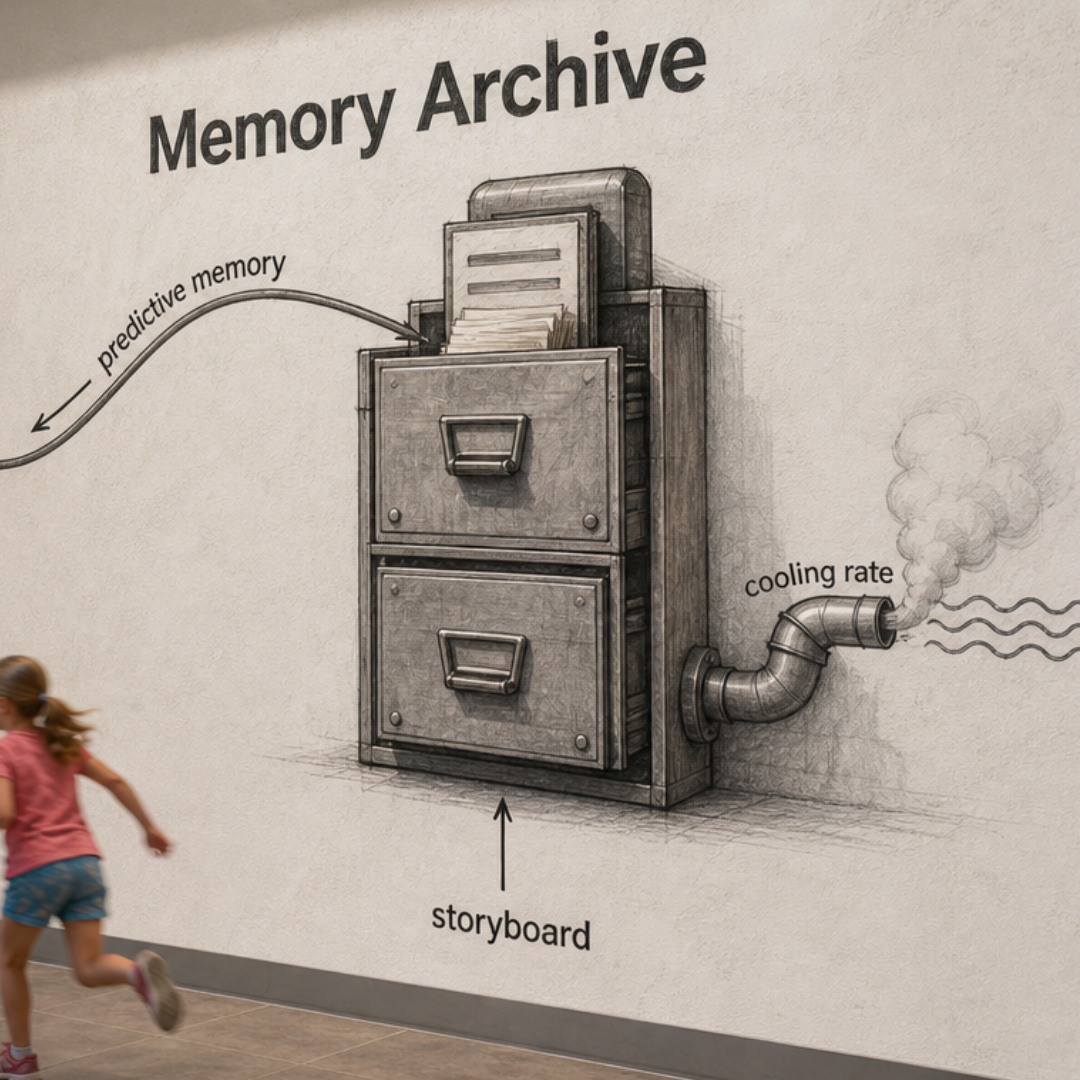
The Overreaction Machine has something called the Memory Archive. We usually think of memory as a place where the past is stored, but the Archive is doing something much more useful than keeping a record of everything that happened. It retains some information, compresses repeated experiences into patterns, discards enormous amounts of detail, and updates what it knows as new information arrives. All of this helps the machine anticipate what might happen next.
That's why you can forget Doris's name but remember the hot tray, why you can predict Grandpa's eye roll before he makes it, and why you know where the cereal bowls are without opening every cabinet.
It's also why losing Grandma involves more than remembering that she's gone. For decades, your machine had been expecting her to be there. Now it has to update thousands of little expectations that were never about the past in the first place.
Explore MindStretched
Once you can see the machinery, human choice stops looking quite so weird.