
Do You Need Help?
Mara was standing on a dining chair trying to hang a curtain rod when Ben walked into the room. She had the rod balanced against one shoulder, a screwdriver in her mouth, and one end of the curtain hanging over her head.
“Do you need help?” he asked.
She took the screwdriver out of her mouth.
“No.”
“Okay.”
Ben walked into the kitchen. Mara stared after him. Two minutes later, the rod fell down and Ben came back.
“I can hold one end if you want.”
“I said I’ve got it.”
“I know. I was just offering.”
“You don’t think I can hang a curtain rod?”
“What?”
“You've asked me twice if I need help.”
“Because you're standing on a chair with a curtain on your head.”
“I know how to hang a curtain rod.”
“I didn't say you didn't.”
“You didn't have to.”
Ben looked at the curtain. Then at Mara.
“I literally asked, ‘Do you need help?’”
“Exactly.”
“No. Not exactly. Those were the words. Four words. None of them were ‘Mara is incapable of hanging curtains.’”
“You were implying it.”
“I was offering to hold the rod.”
“Because you thought I needed you to.”
“Because it has two ends.”
They were now having an argument about a sentence neither of them had actually heard.
Ben heard:
You appear to be struggling. I can make this easier for you.
Mara heard:
You appear to be struggling. I don't think you can do this yourself.
Same four words. Different detected social act. That distinction is easy to miss because humans tend to treat language as though speakers package meaning into sentences and listeners open the package. Unfortunately, we did not build humans with FedEx.
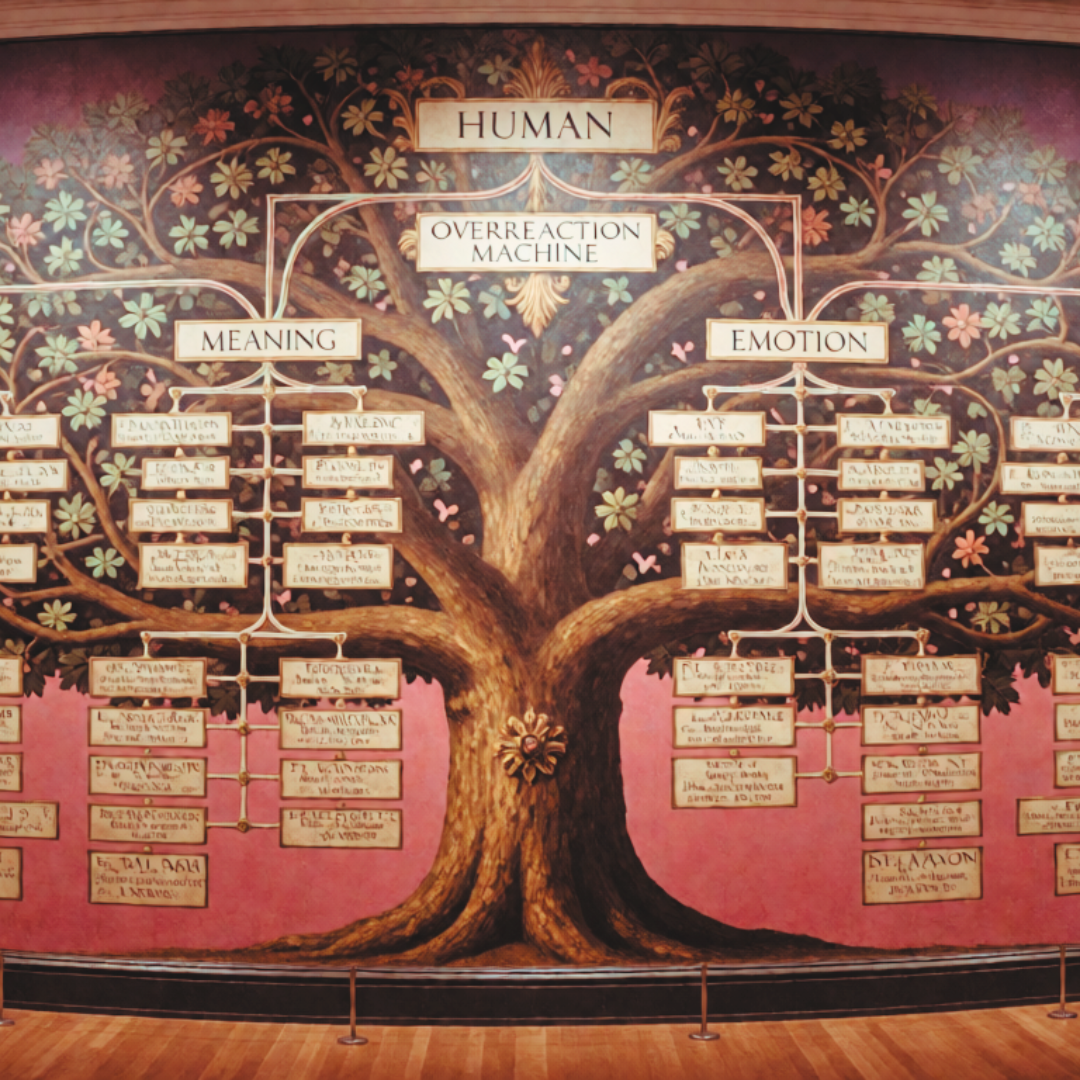
A machine doesn't receive only what someone says. It also has to determine what the person is doing by saying it. Are the sending an offer, a criticism, a warning, a challenge, an intrusion, an attempt to control, an attempt to reassure, a bid for closeness, a request disguised as a question, a judgment wearing a nice hat.
The words are evidence. They are not the finished event.
“Do you need help?” can become an offer in one machine and an assessment of competence in another.
“I’m proud of you” can become affection, recognition, or an announcement that the speaker considers themselves qualified to issue grades about the other.
“Don’t worry” can be reassurance or it can be dismissal.
“You’re wonderful exactly as you are” can become acceptance or an unsolicited attempt to adjust someone else’s opinion of themselves.
Same words. Different event.
This is where arguments become particularly efficient.
“I wasn’t criticizing you.”
“Yes, you were.”
“Tell me what I said that was critical.”
“It was the way you asked if I needed help.”
Now each machine produces evidence for a different trial.
Ben points to what he was doing. I was offering to help.
Mara points to what her machine detected. You were questioning whether I could handle it.
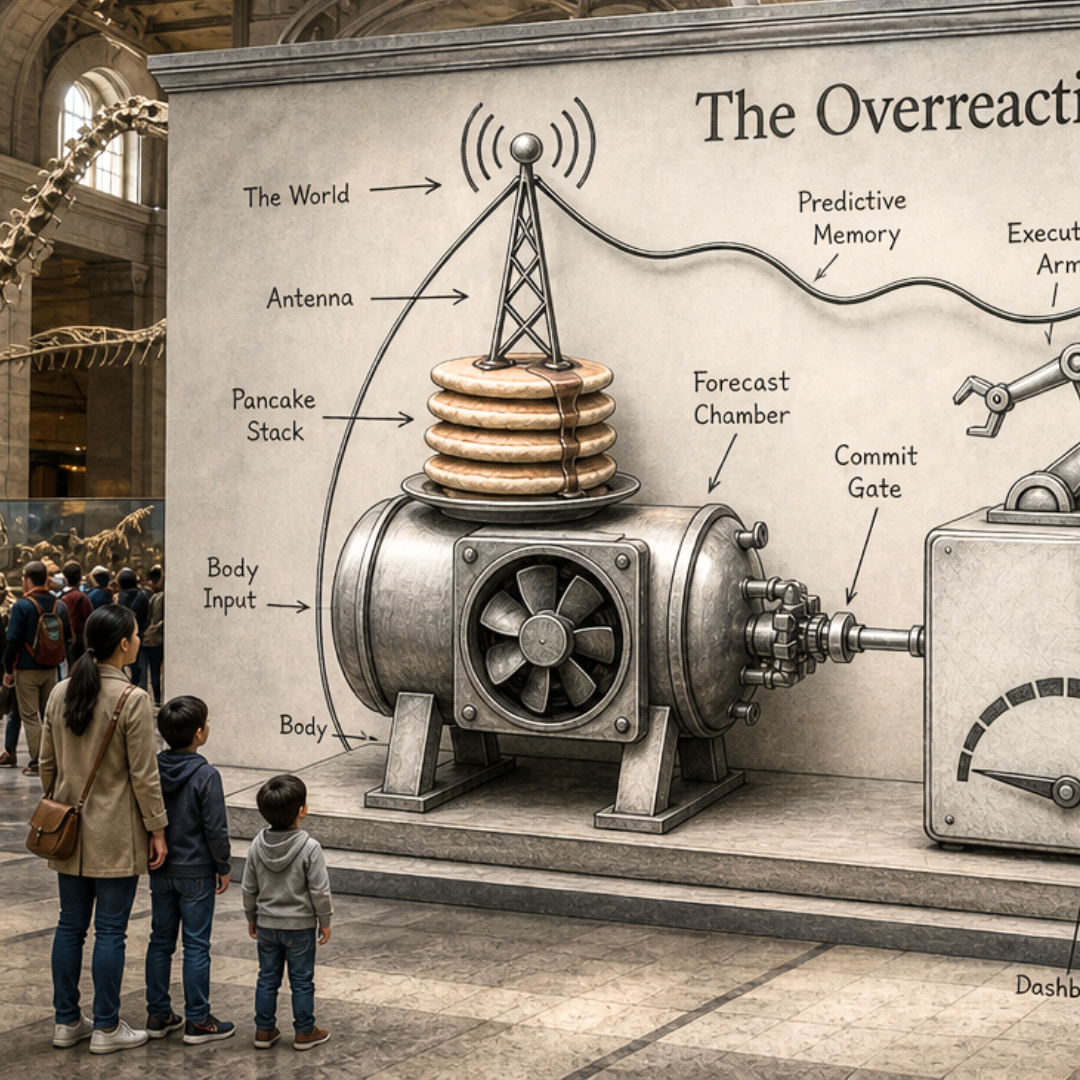
Neither one has direct access to what happened inside the other machine. Ben knows what he intended to do. Mara knows what his words became when they entered hers. Neither fact establishes the other.
Mara detecting criticism doesn't prove Ben was criticizing her. Ben intending an offer doesn't mean Mara's machine had to construct one. Two machines were in the room. So were two versions of “Do you need help?”
By the time the curtain was hanging, neither of them needed help with the curtain. They needed several hours to establish what four words had been doing.
Explore MindStretched
Once you can see the machinery, human choice stops looking quite so weird.