But it’s for her own good
A few months after their mother turned eighty-six, two sisters began having the same argument over and over again. Their mother had become increasingly unsteady on her feet, and although she owned a perfectly good walker, she preferred leaving it parked beside the sofa while she wandered around her apartment without it. One sister found this terrifying. Every time their mother stood up, she could already picture the phone call. Mom fell and we're at the hospital. She broke her hip.
Her sister was considerably less alarmed. Their mother had been walking around without asking anyone's permission for eighty-six years, and as far as she was concerned, that arrangement should continue for as long as possible. Yes, she might fall. She also might not. Meanwhile, every new safety rule seemed to make their mother's world a little smaller. Don't go outside alone. Wait until somebody can walk with you. Use the walker. Let somebody get that for you. Sit down, Mom, I'll do it.
This drove the first sister crazy. “You know what happens when old people fall, right?”
Of course she knew, everyone knew. This wasn't obscure information requiring access to the latest gerontology research. An eighty-six-year-old woman could fall, break a hip, end up in the hospital, lose mobility, and never completely recover.
The second sister simply kept noticing a different problem. If their mother stopped walking because everyone was afraid she might fall, she would get weaker. The weaker she became, the more help she would need. And the more help she needed, the less she would do for herself. It seemed entirely possible to protect their mother from losing her independence by steadily removing it.
Then came the scissors. Their mother had cut her own hair for most of her adult life. Nothing elaborate, just the occasional trim in front of the bathroom mirror when her bangs got too long. One afternoon she announced that she needed her scissors, and the first sister immediately said no.
“They're sharp.”
Her sister looked at her. “They're scissors.”
“She could cut herself.”
“She could cut herself making lunch.”
“That's different.”
It wasn't different to the second sister, which was exactly the problem. To one of them, an elderly woman with shaky hands holding scissors near her face was an unnecessary risk with an extremely obvious solution: take away the scissors and have someone else cut her hair. To the other, taking away an object their mother had competently used for sixty years because something bad might happen was another tiny transfer of control from their mother to everyone around her. Both sisters thought the other one was being slightly ridiculous.
This is usually the point where people start producing more facts.
Falls are one of the leading causes of serious injury in older adults.
Staying physically active helps preserve strength and mobility.
Sharp objects can cause injuries.
Maintaining independence is important for older adults.
Each new fact feels as though it should finally settle the argument. Except neither sister was missing those facts.
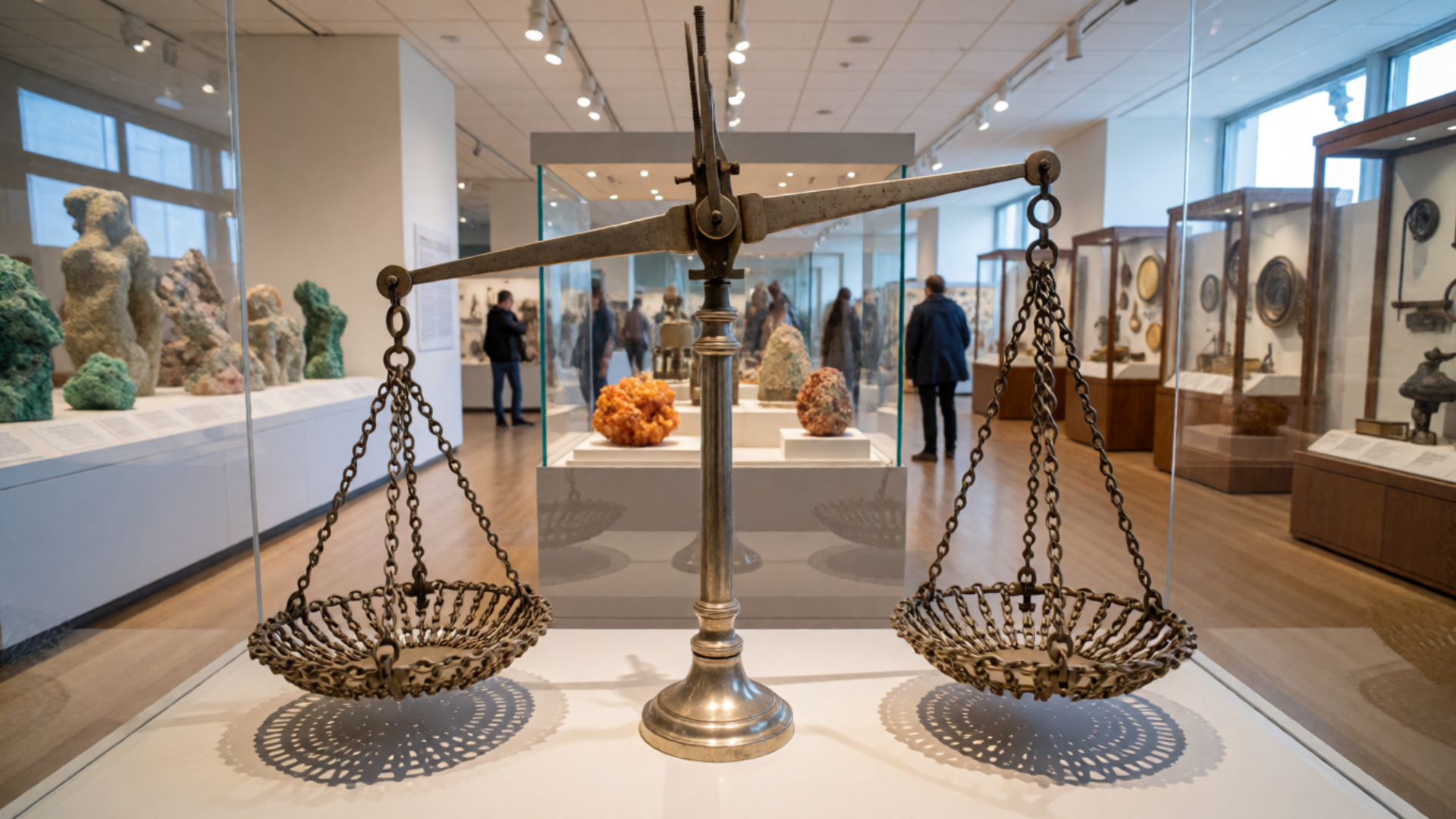
They weren't disagreeing about whether falling was dangerous. They weren't disagreeing about whether walking preserved strength. They weren't even disagreeing about whether scissors were sharp, despite the brief need to establish the traditional properties of scissors. They were disagreeing about which future was harder to tolerate.
One sister kept seeing the future in which their mother fell, got hurt, and everyone realized they could have prevented it. Every unnecessary risk looked like something the family should remove while they still had the chance.
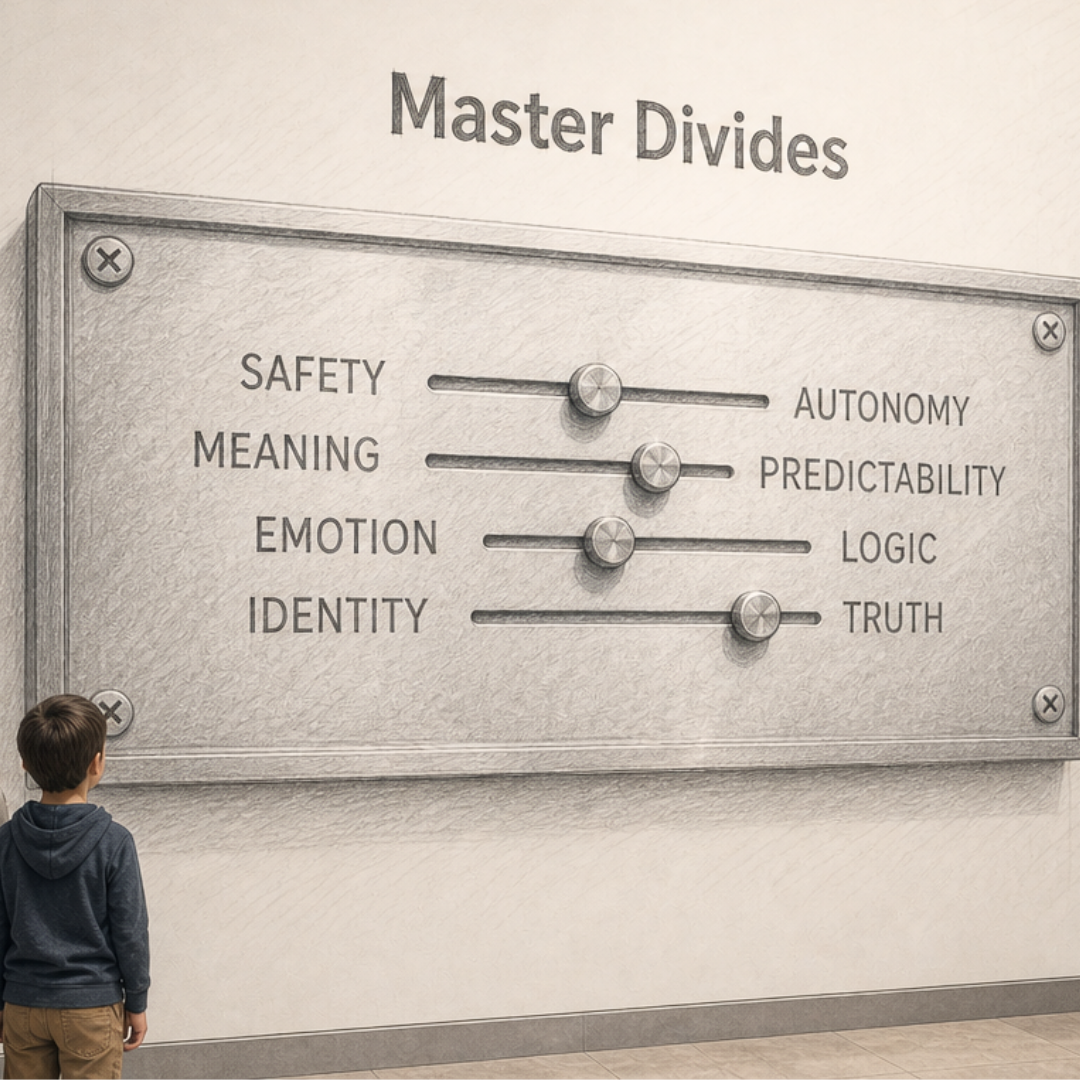
The other kept seeing the future in which their mother remained perfectly safe while gradually losing authority over the ordinary details of her own life. Every precaution looked small by itself, but together they seemed capable of producing a woman who was protected from almost everything except having her own life. The Master Divides, Safety and Autonomy, were sitting on opposite sides of the same argument.
Then their mother made the whole thing more complicated. At first she wanted the scissors. Then one daughter told her they were dangerous. Someone else agreed. A caregiver suggested that perhaps it would be better to let somebody help. Her daughter reminded her that everyone was only worried because they cared about her. Eventually their mother said, “Fine,” and handed over the scissors.
The first sister relaxed. Good, problem solved. The second sister didn't.
From the outside, it looked as though their mother had reconsidered and chosen Safety. But there was another possibility. By then the decision wasn't only about scissors anymore. Using them meant continuing to argue with her daughter, worrying everyone, ignoring the caregiver, and becoming the eighty-six-year-old woman everyone had to supervise because she wouldn't listen. Handing them over ended all of that immediately. The Social pancake had entered the room.
This is what makes human disagreements so difficult to understand from the outside. We look at the final behavior and assume it tells us what mattered most. Mom handed over the scissors, therefore she agreed they were unsafe. One sister insisted on the walker, therefore she understood the danger more clearly. The other resisted, therefore she didn't appreciate the risk.
But the same facts can enter differently configured machines and produce entirely different expensive futures. Safety asks what might happen if nobody intervenes. Autonomy asks what might disappear if everyone does. Then Social can arrive and make the cheapest future something neither side was originally arguing about. The facts were never the disagreement.
That is what the Master Divides help us see. Before deciding that the other person has somehow failed to understand the obvious, it may be worth asking what their machine is trying hardest to keep stable.
Explore MindStretched
Once you can see the machinery, human choice stops looking quite so weird.