Where did the smart person go?
You probably know someone who is extremely intelligent right up until one particular subject comes up. Maybe it’s their child or their health or money, politics, their marriage, the family business. Five minutes ago this person could evaluate evidence, notice contradictions, and explain complicated problems with admirable precision. Then someone mentions the thing. And you find yourself wondering, Where did the smart person go?
Imagine a family sitting around the dinner table talking about Lou, the thirty-two-year-old son who just lost another job. This isn't Lou’s first lost job… or his second. Over the past six years, he's worked for five different companies, and every one of them has ended badly. He’s been late repeatedly, missed shifts, fought with supervisors. Twice he stopped showing up altogether.
Lou’s father, Tom, is a successful engineer. At work, people come to him when something goes wrong because he’s unusually good at separating evidence from explanation. If a machine part fails twice in the same place, Tom doesn’t blame the weather. He looks for the recurring mechanism.
Tonight, however, we are discussing Lou.
“His manager was terrible,” Tom says.
His wife looks at him.
“What about the job before that?”
“That company was badly run.”
“And the one before that?”
“He never should have taken that job in the first place.”
There is a brief silence around the table.
Someone finally says, “Tom, at some point don't you think Lou might be part of the problem?”
Tom immediately begins explaining why this situation is different. And this is the moment when everyone else at the table begins wondering what happened to the engineer.
Tom didn’t suddenly become less intelligent. His ability to reason didn’t disappear between the mashed potatoes and dessert. Logic is still sitting inside the machine, fully operational. It just isn’t the part currently in control.
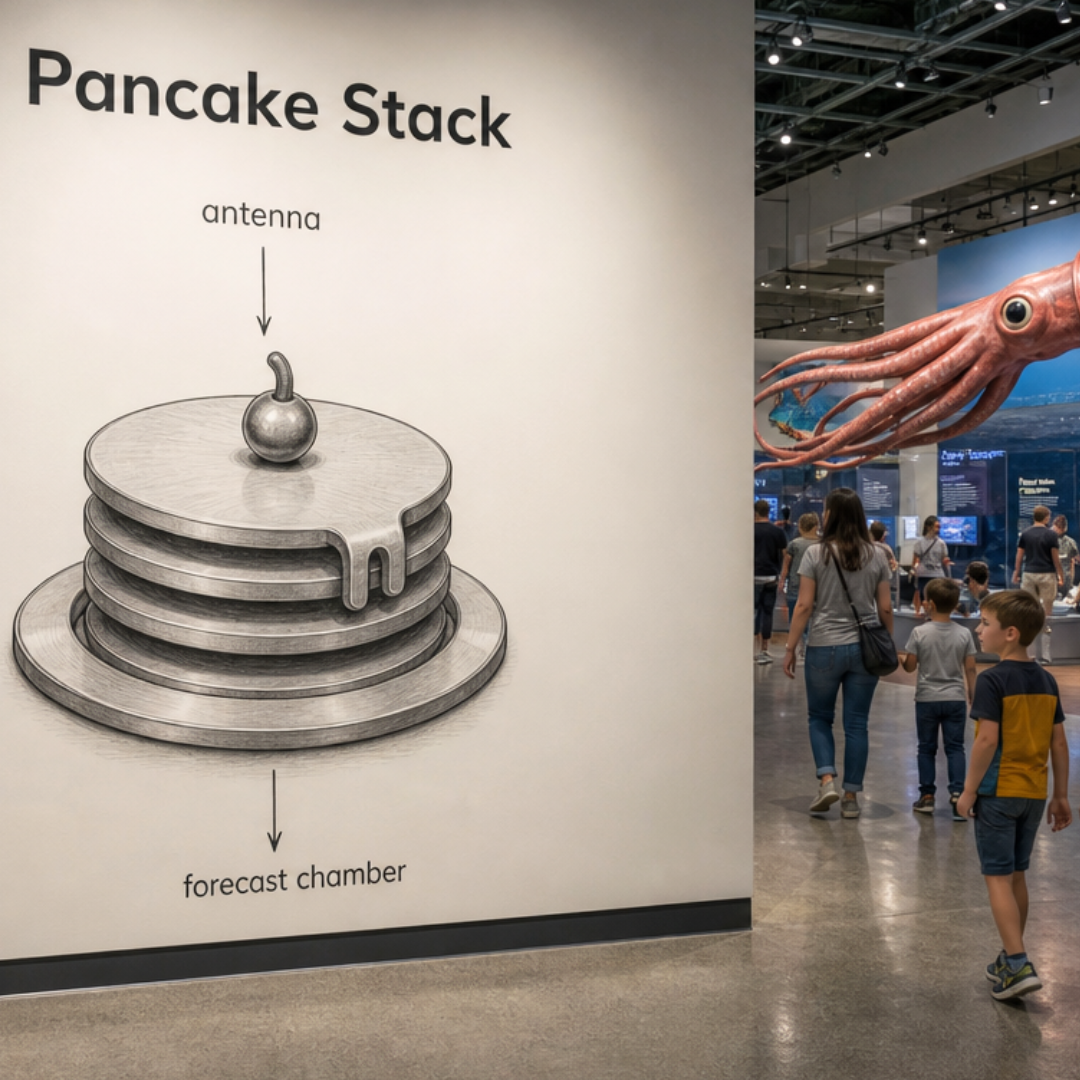
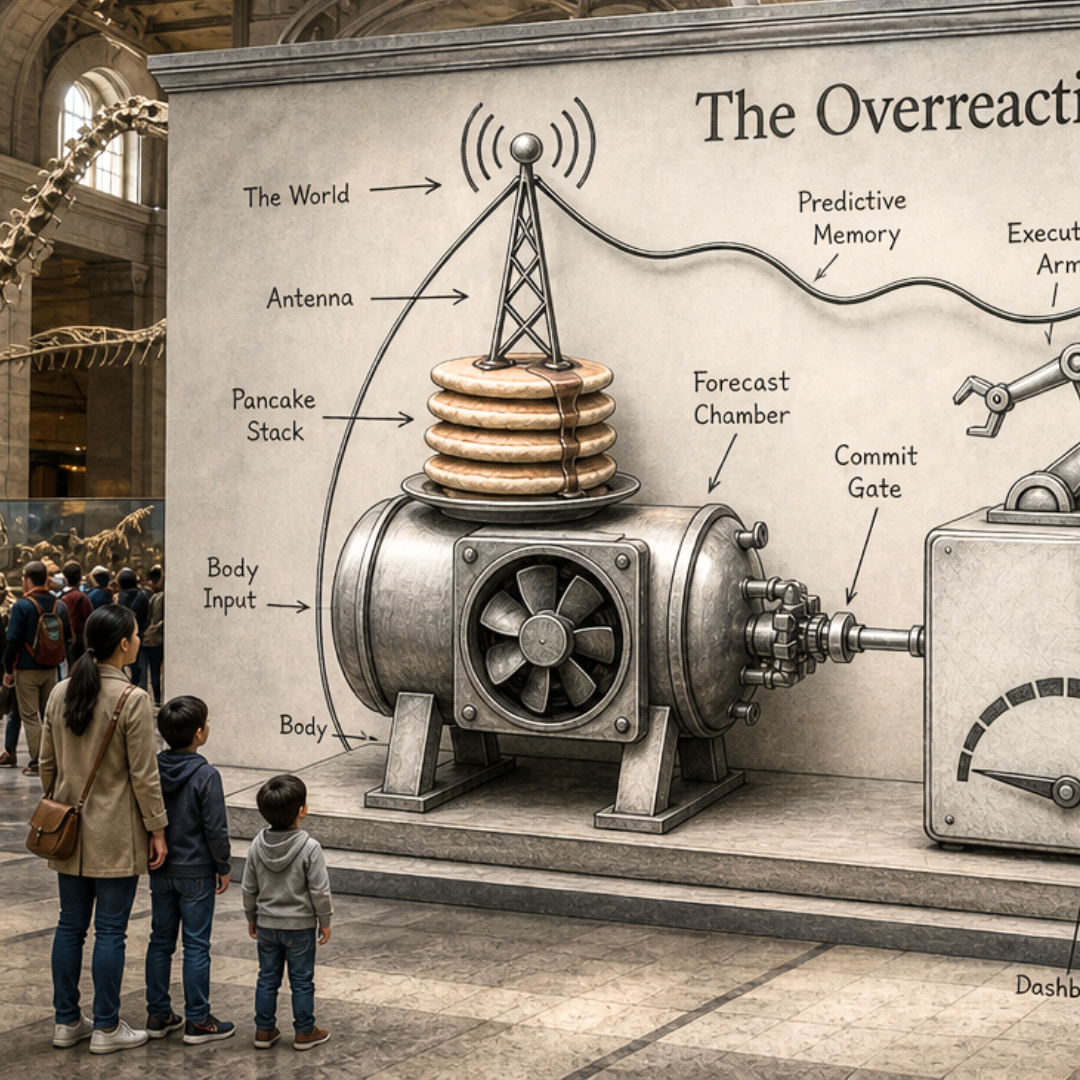
Inside the Overreaction Machine is something called the Pancake Stack. Yes, pancakes. Mechanology has standards, but apparently not very high ones. The Stack contains four regulatory engines: Survival, Pattern, Social, and Logic. All four are available to the machine, but they are not equally influential. As a situation develops, one gains control and determines what problem the Forecast Chamber begins trying to solve.
When Tom is examining a failed piece of equipment at work, Logic may be sitting comfortably on top asking, What explanation best fits the evidence?
But Lou isn't a failed piece of equipment, Lou is his son. Now Social has climbed to the top of the stack and the Forecast Engine has started working hard in the background. What happens to my relationship with my son if I see him this way? What does it mean if everyone else thinks he’s the problem? What happens if he feels abandoned? What happens if I stop defending him?
The machine is no longer solving a logic problem. That distinction matters because we often describe moments like this by saying emotion overrode logic, as though intelligence temporarily shut down and everyone should wait patiently for it to reboot. But Logic doesn't have to disappear for another regulatory engine to take control.
In fact, Tom can use considerable intelligence while Social is driving. He can remember details everyone else forgot, identify legitimate flaws in Lou's employers, construct sophisticated explanations, and poke holes in everyone else's argument. Being smart can make a machine very good at solving whichever problem it is currently trying to solve.
This happens everywhere. For instance, a mom who calmly explains that children need independence, right up until she sees her own child climbing high up a tree. Survival enters the meeting and quickly shouts, “GET DOWN FROM THERE!”
A researcher who has spent twenty years building an elegant theory encounters one strange result that threatens the entire structure. Suddenly, Pattern would like a word, pushing Logic to the side.
And sometimes nothing particularly threatening, relational, or disruptive is happening. Someone is working through a puzzle, comparing evidence, or trying to figure out why the dishwasher stopped working. Logic enjoys these days in peace.
The important thing is that these are not four kinds of people. Every human machine has all four regulatory engines. Which one gains control can vary by person, by subject, and by situation. That’s why someone can look astonishingly rational in one part of life and completely baffling in another.
We keep asking, How can someone so smart believe that?
How can she not see what everyone else sees?
Why is he suddenly incapable of being reasonable?
Maybe the smart person never went anywhere. Maybe we were just watching the wrong pancake. Being capable of logic doesn't mean Logic is currently driving.
And before deciding that an intelligent person has mysteriously stopped making sense, there may be a more interesting question to ask:
Which pancake is in control?
Explore MindStretched
Once you can see the machinery, human weirdness stops looking quite so mysterious.