How the Heck Did Social Media Become This?
I'm sure nobody asked for social media to become what it is. I remember when it seemed like a fairly cute idea. Find people you haven't seen since high school. Post some vacation pictures. See what your cousin's kids look like. Tell everyone what you had for lunch for reasons nobody ever adequately explained.
There was no meeting where humanity sat down and said, You know what would really improve civilization? Let's give several billion humans a device they carry everywhere that lets them continuously compare themselves to other people, display status, seek approval, detect threats, form groups, find enemies, watch strangers, gossip, argue, punish people publicly and count exactly how many other humans approved of whatever they just did.
Then let's have computers watch the whole thing and learn what makes everybody keep looking. Nobody chose that, but we built it anyway.
This is one of the stranger things about civilization. We talk about “the future” as though it's a destination somebody is building. What will the future look like? What kind of society are we creating? What will technology do to us? What will future me be doing?
But humans can't actually see the future. The Machine has a Forecast Chamber, not a crystal ball. It generates possible futures from what it knows right now, and those are the futures available when it makes its next choice.
Imagine the earliest, simplest version of social media. Somebody posts a picture, other people look at it, some respond, and the person who posted it notices what got a response. That's already enough machinery to get us into trouble.
Humans didn't arrive on Facebook as blank organisms waiting to learn what a Like button was. They arrived with machinery built long before computers existed. Social information mattered, status mattered, belonging was extremely important. Other people's reactions also mattered, along with threats, sex, novelty, and what everyone else was doing.
Evolutionary biology had been working on this project for a very long time. Then somebody added buttons and an algorithm.
Now one human posts something and gets almost no response. Another posts something and gets 800 responses. Humans are quite capable of detecting the difference, which changes their behavior.
Meanwhile, the platform is detecting the pattern too. Some things make people scroll past. Others make them stop, click, comment or become furious enough to spend the next forty minutes explaining to a stranger named PatriotMom47 why she is personally destroying America. The algorithm takes note, so show more of that. But even that doesn't explain how we got here, because social media wasn't developing by itself.
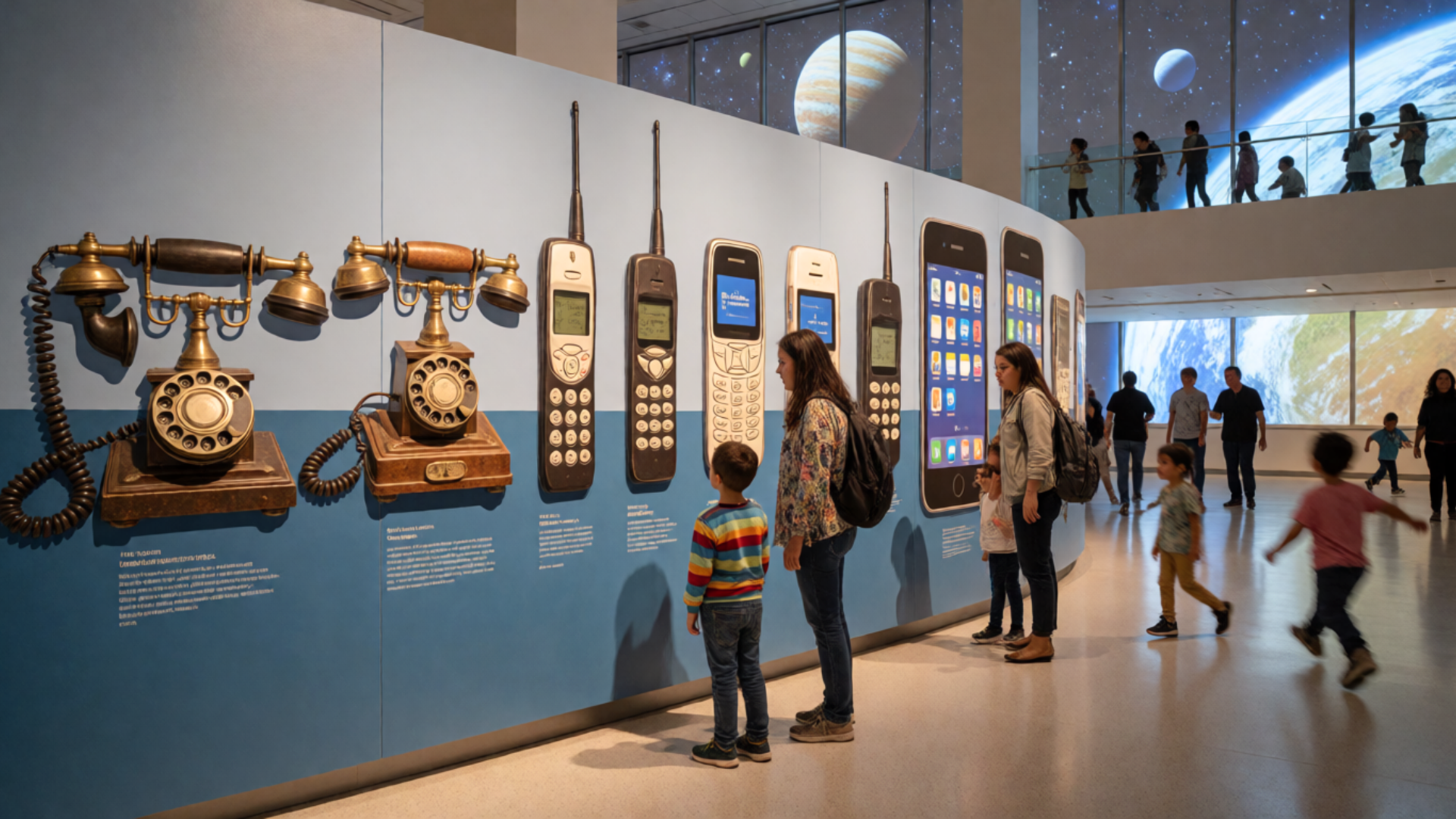
At the same time, phones were getting smarter, cameras moved into those phones, internet access got faster and cheaper. Cell towers spread, computing power exploded, algorithms got better at predicting what people might want to see. Advertising moved online and billions more people connected to the internet. Suddenly a person didn't have to go home, turn on a computer and intentionally visit a website to participate. The whole thing was in a pocket. And all of these things were changing each other.
A better phone changed what people could post. What people posted changed what platforms built. What platforms built changed what advertisers could buy. Advertising money changed what companies optimized. Better recommendation systems changed what people encountered. What people encountered changed what they produced. Then billions of human Machines responded to all of it.
Nobody in 2004 had to forecast TikTok influencers, beauty filters, viral misinformation, teenagers building careers from their bedrooms, grandparents fighting in Facebook comments, politicians communicating directly with millions of followers, or a human opening Instagram to check one message and somehow resurfacing forty-seven minutes later knowing what a woman in Australia feeds her miniature cow. Those weren't available futures yet.
That's the part we miss when we look backward. Once something exists, the path to it can start looking almost inevitable. Of course smartphones led to this. Of course social networks became advertising platforms. Of course algorithms learned to maximize engagement. Except none of that was sitting there at the beginning as one trajectory called SOCIAL MEDIA BECOMES THIS.
There were millions of smaller trajectories being selected by different people with whatever forecasts were available at the time. Let's build this feature, buy this phone, post this picture, add a camera. Let's improve the network, recommend this video, sell this ad, follow this person, start this company, click this thing. Every output changed what could happen next.
And that matters because the next Machine wasn't choosing inside the world the previous Machine had chosen in. It was choosing inside the world all those previous choices had helped create.
Eventually a teenager arrives who didn't participate in any of those earlier decisions. She doesn't encounter them as decisions at all. She encounters social media as part of the world, complete with follower counts, algorithms, influencers, beauty filters, viral videos, status systems and social rules that existed before she was old enough to have a phone. Now her Machine forecasts from there.
Which makes the question How the heck did we get here? much harder to answer than it sounds. Nobody knew where “here” was. They couldn't. “Here” didn't exist yet.
Explore MindStretched
Once you can see the machinery, human choice stops looking quite so weird.