BODY
Where the Machine Has to Live
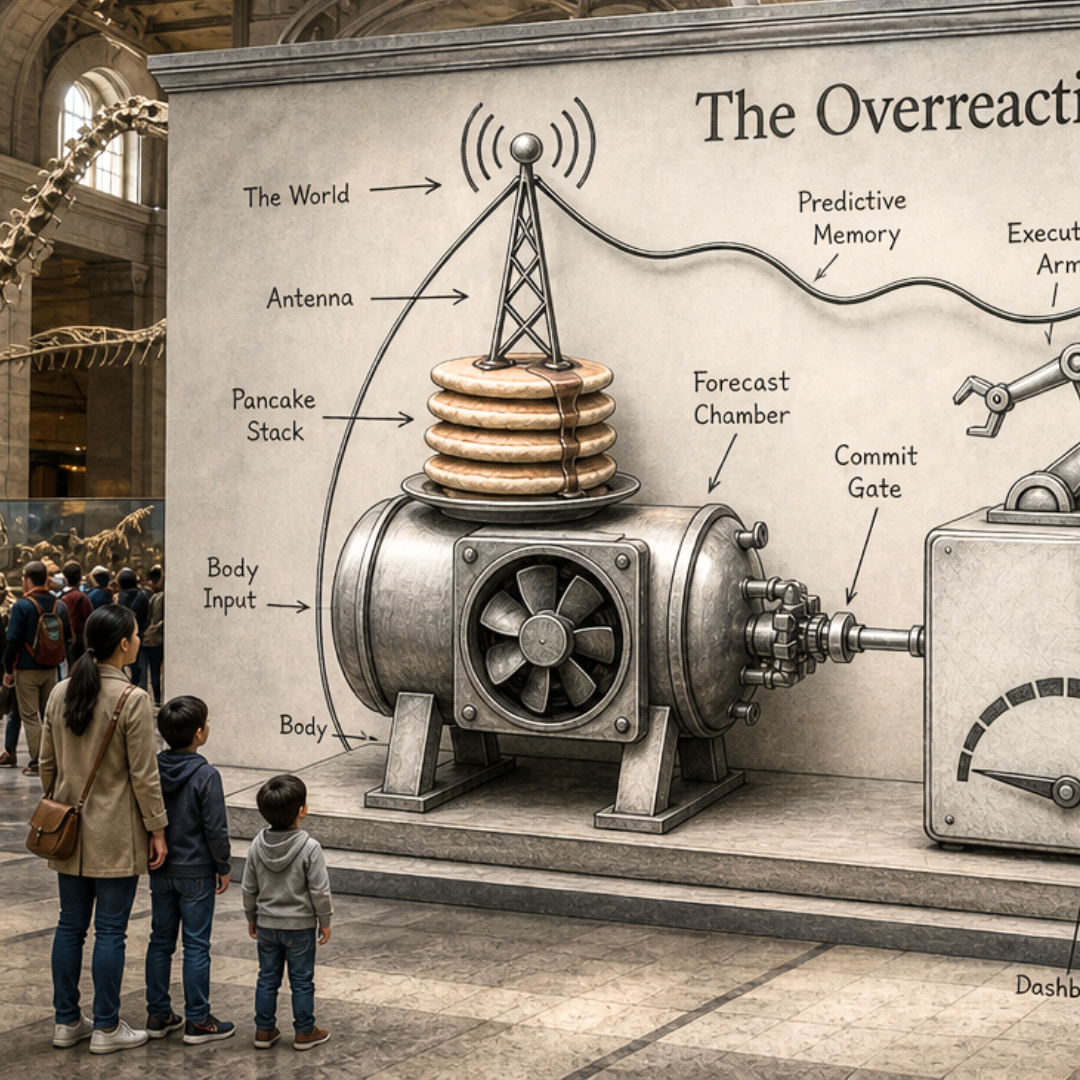
The Overreaction Machine has a slight engineering complication. It has to run inside a human body.
A body that gets hungry and tired. A body that gets sick, overheated, injured, caffeinated, startled, uncomfortable, exhausted, energized, or occasionally very interested in locating the nearest bathroom.
This matters, because the same machine does not necessarily operate the same way under different physical conditions.
Welcome to the Body.
What Is the Body?
The Body is the physical organism in which the Overreaction Machine operates. It is not another component of the machine.
There is no:
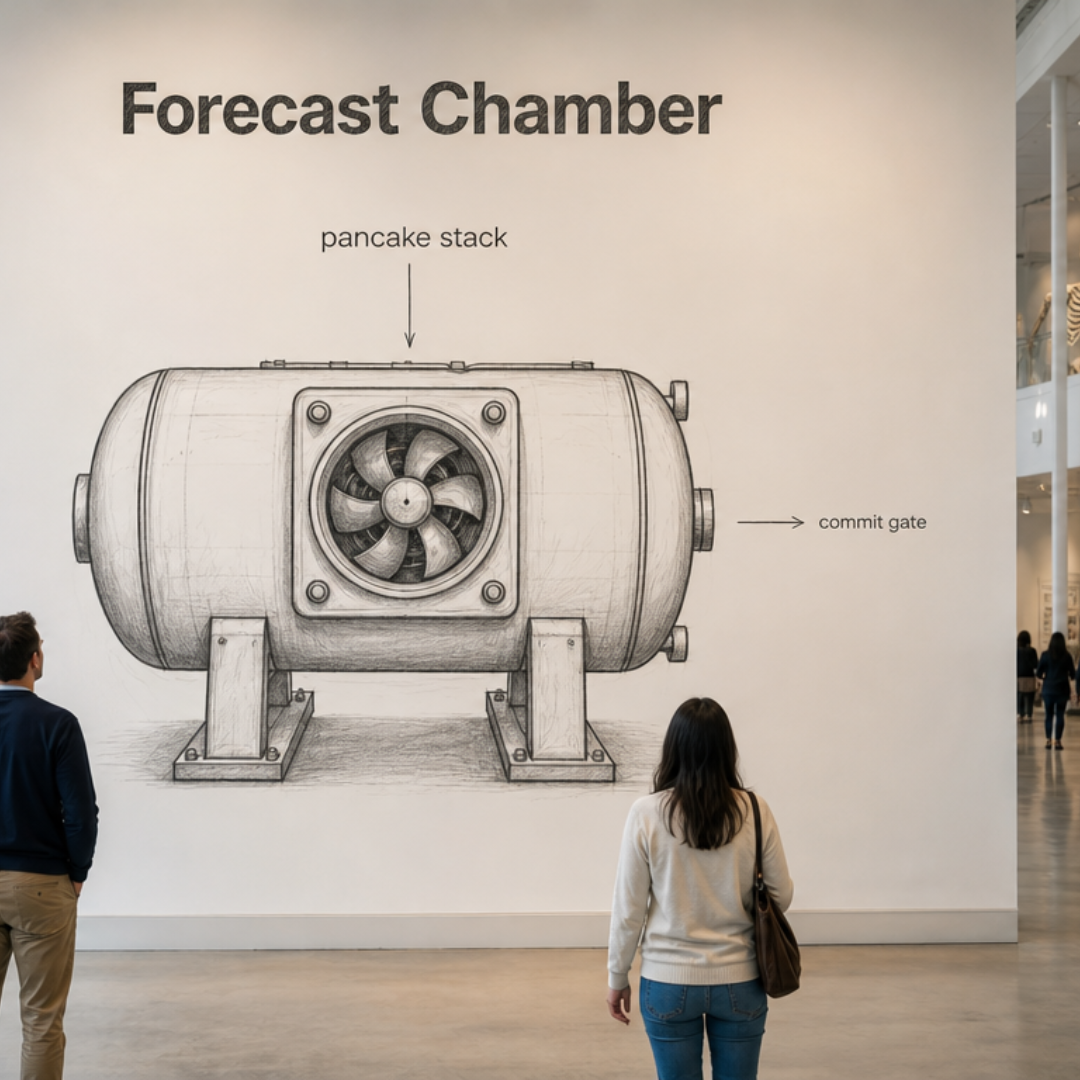
Antenna → Nested Stack → Body → Forecast Chamber
The entire machine is embodied. And for our purposes, the Body has two important jobs:
It supplies internal signals to the machine.
And:
It establishes the physical operating conditions under which the machine must run.
That's enough machinery for one body.
Job One: Supply Body Signals
Your machine isn't only receiving information from the world around you. It's also receiving information from you.
Hunger. Pain. Fatigue. Temperature. Nausea. Physical tension. A racing heart. Low energy. A full bladder. Whatever strange thing your left knee has decided to report this morning. These are signals.
Like information arriving from the outside world or predictive information activated from Memory Archive, body signals become available to the Antenna.
The Antenna then does what Antennas do:
It weights them.
A faint sensation may remain background. Another may become one of the loudest signals in the machine.
So our incoming world isn't merely:
What's happening around me?
It also contains:
What's happening inside me?
And those can be very different worlds.
Body Signal Is Not Body State
This distinction earns a label. Suppose you haven't eaten all day. Hunger is a body signal that enters through the Antenna.
But the physical condition of an organism that hasn't eaten all day is something larger. That's Body State.
Or suppose you've been awake for twenty hours. The machine may receive, I'm tired. That's information. But it's also attempting to operate inside a severely tired organism, which isn't quite the same problem.
This brings us to the Body's second job.
Job Two: Establish Operating Conditions
The Overreaction Machine does not operate in a vacuum. It operates under the current physical conditions of its body.
A well-rested machine and an exhausted machine may have the same architecture. They may have the same configuration, even belong to the same person, but they still aren't operating under the same conditions.
Pain can change the operating environment. So can illness, sleep deprivation, physical exhaustion, hunger, acute physiological arousal, drugs or alcohol, changes in available energy.
The exact effects can differ enormously, and MindStretched does not need to pretend it has mapped every physiological pathway involved.
The mechanical point is simpler:
Body State changes the conditions under which the whole machine operates.
Same machine with different operating conditions. Run again.
The Emergency Setting
Most of the time, Body State is merely one contributor among many. You're a little hungry. Your back hurts. You didn't sleep particularly well. The machinery continues conducting its usual unnecessarily elaborate business.
And then occasionally the Body renders nearly everything else irrelevant.
Stay alive.
A serious physical threat can reorganize the operating situation so dramatically that the interesting question is no longer what someone values, what their Storyboard says, or where they usually fall on a Master Divide. The organism has acquired a more immediate assignment.
This doesn't mean the person has become a different machine. It means the same machine is now operating under radically different physical conditions. The museum recommends resolving the emergency before administering the personality questionnaire.
Where the Body Sits
Not here:
ANTENNA → PANCAKE STACK → BODY → FORECAST CHAMBER
Instead, picture the entire Overreaction Machine sitting inside the Body.
The Body is the physical platform on which all of it runs.
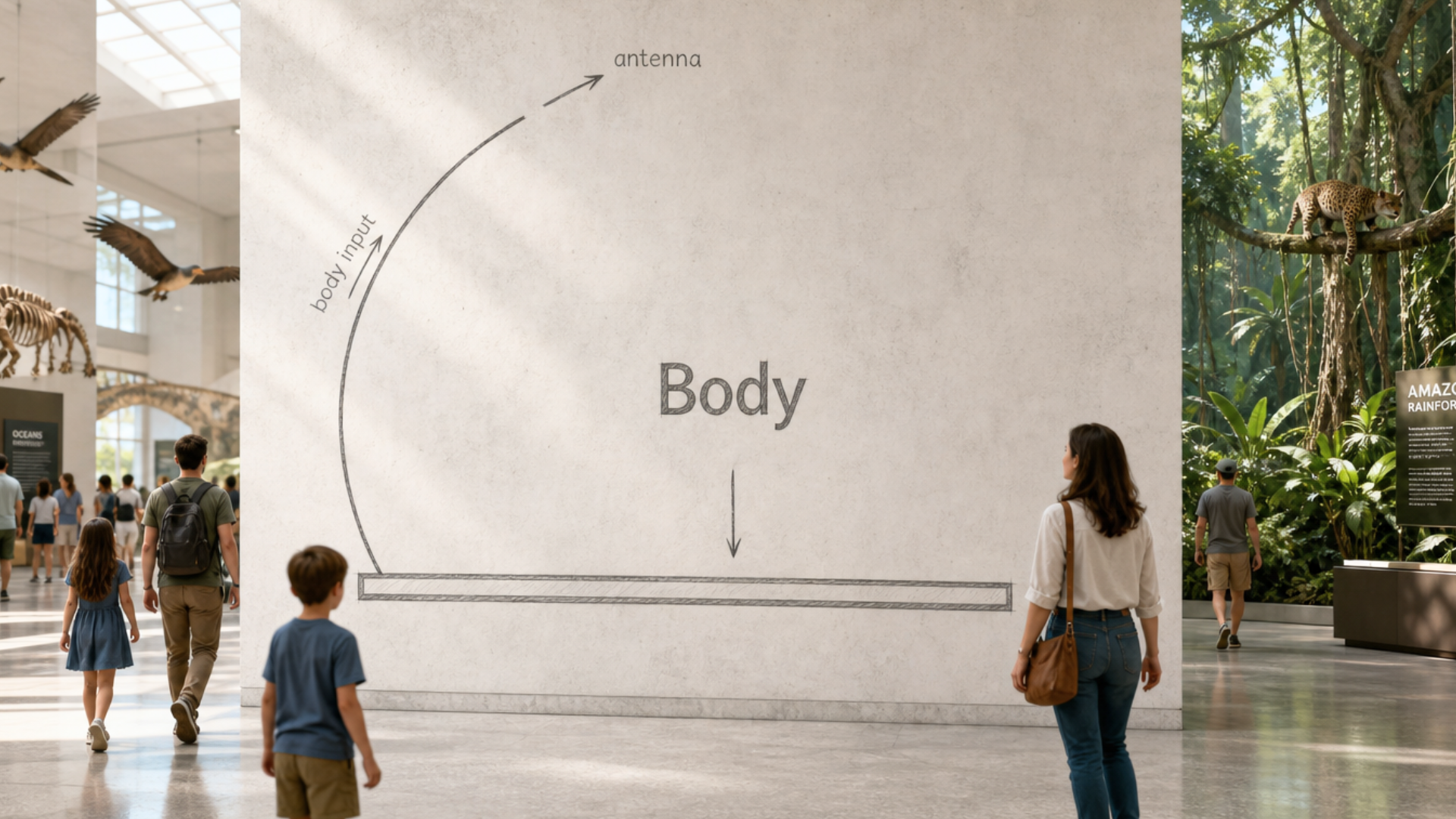
One of its relationships can be drawn directly:
BODY
↓ body signals
ANTENNA
But Body State belongs underneath the whole machine.
It is part of the operating condition of the apparatus itself.
That's why the Body belongs in the museum without belonging in the machine's component sequence.
What the Body Does Not Do
The Body does not replace the machinery.
Being tired doesn't tell us what someone will do.
Hunger doesn't generate a particular forecast.
A racing heart doesn't automatically mean fear.
Pain doesn't determine which Pancake Stack engine will control forecasting.
And Body State is not Machine Configuration. That's especially important.
Configuration describes relatively persistent differences in how a particular machine is set.
Body State describes the physical conditions under which that machine is operating right now.
A machine hasn't necessarily been reconfigured because its owner got the flu. It's simply been issued worse working conditions.
Same Machine. Different Day.
This distinction gives us a useful way to investigate behavior that otherwise looks inconsistent.
Yesterday: A problem appears.
The person considers several possibilities, stays relatively flexible, and handles it easily.
Today: Similar problem. Same person.
Much shorter fuse, fewer tolerable possibilities, greater effort, different behavior.
The usual explanation begins with personality:
Why are you being like this?
Mechanology has several questions before we get there.
What changed in the incoming signal?
What changed in the machine?
And:
What condition is the Body in?
Because sometimes the answer to apparently mysterious human behavior isn't hidden in childhood, identity, motivation, character, or a secret emotional wound. Sometimes the specimen has just been awake for twenty hours. We should probably check that before excavating its psyche.
The Important Consequence
We can now distinguish two things that are very easy to confuse:
MACHINE CONFIGURATION
How this machine tends to operate.
BODY STATE
The physical conditions under which it is operating right now.
Configuration helps explain persistent differences between machines.
Body State helps explain why the same machine can operate differently across time.
And now our specimen is becoming considerably easier to inspect. We know something about the world entering it. We know which regulatory engine can take control. We know its global configuration.
And now we know something equally important:
what condition the machinery is in today.
Explore MindStretched
Once you can see the machinery, human choice stops looking quite so weird.