
Judgment is never the explanation
Imagine a scientist discovers a species of bird that repeatedly eats a particular berry. At first, nothing seems unusual. Then the scientist notices something strange. The berry is slowly poisoning the bird. Birds that eat it have shorter lives than birds that don't.
The scientist now has a mystery. Why would a bird repeatedly choose something that harms it? He doesn't write in his notebook, "Poor character." He doesn't conclude the bird lacks discipline or wonder whether the bird is avoiding its feelings. Those aren't explanations. They're conclusions pretending to be explanations. So he keeps investigating.
Maybe the berries contain a nutrient that's difficult to find elsewhere, or maybe they're the only food available during that time of year. What if they provide enough immediate benefit that, despite the long-term cost, the behavior survives generation after generation? Whatever the answer turns out to be, the scientist begins with one assumption: if the behavior keeps occurring, there is something about it he doesn't understand yet.
Now that same scientist goes about his normal week.
Someone in the grocery store fills a cart with junk food. He overhears someone else say, "They just have no self-control."
At the mall, a lady walks out of the shoe store carrying three new boxes of shoes. “I have no willpower,” she tells her friend.
He visits his sister whose teenager spends another entire Saturday playing video games. "He’s avoiding reality," she says.
Throughout the week things happen and explanations come just as quickly. The scientist is puzzled, not because those behaviors don't have consequences, but because they clearly do. And, like his bird, none of those explanations tell him why the behaviors continue. They simply assign the behavior a judgement.
An interesting thing about the human mind is that it doesn’t particularly enjoy unanswered questions. The moment we see or do something, the Storyboard quietly begins constructing an explanation that makes the behavior make sense. It doesn't like empty spaces, so it fills them with labels like weakness, laziness, poor choices. The story arrives so quickly that it rarely feels like a story at all. It just feels like reality.
That's useful much of the time. A fast explanation is usually better than no explanation, but it often comes with a hidden cost. The label creates the feeling that we've understood something when we've really just stopped looking for an answer.
Suppose the scientist eventually discovers the berries contain the only mineral available during nesting season that increases the number of chicks that survive. Suddenly the behavior looks different. The poisoning never disappeared. It simply wasn't the only thing the bird was calculating.
Human behavior works the same way. If someone repeatedly procrastinates, racks up credit card debt, reaches for a bottle of wine, spends another night scrolling cat videos, the true cost calculation has already been made using a huge number of invisible factors. The least expensive action in that moment won.
The question was never whether the behavior had consequences. The question was why, despite those consequences, the behavior kept winning. The reason is never willpower or lack of character.
Explore MindStretched
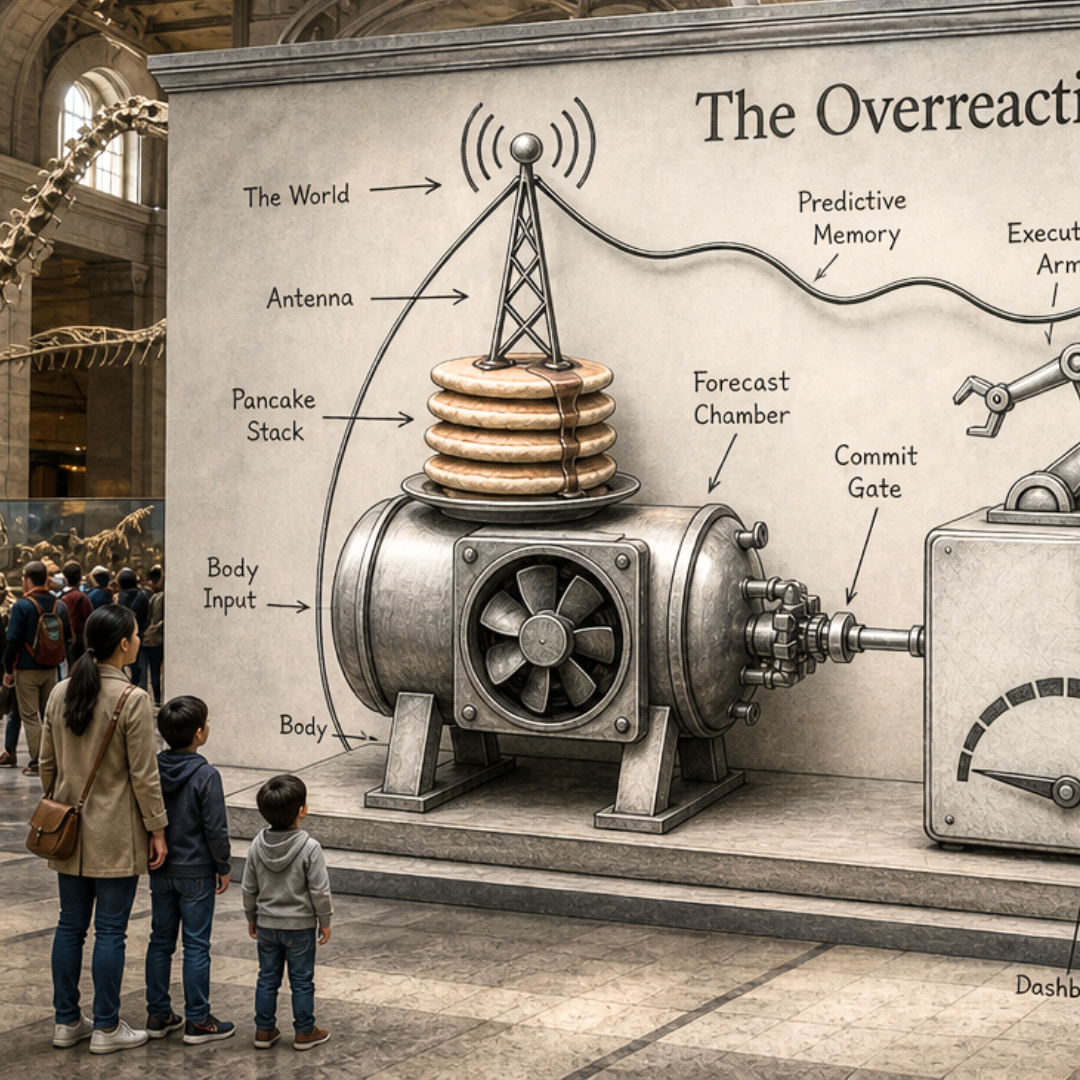
Once you can see the machinery, human choice stops looking quite so weird.