Why society rejects new ideas
In the middle of the nineteenth century, hospitals across Europe had a deadly problem they couldn't explain. Women were dying shortly after giving birth from an infection called childbed fever. In some hospitals, one mother out of every ten died. In others, the death rate was even higher. Doctors proposed all kinds of explanations: bad air, overcrowding, diet, climate. None of them explained why one maternity ward could lose far more mothers than another operating just down the road.
A young physician named Ignaz Semmelweis noticed something that most people considered unimportant. One maternity clinic was staffed by doctors who spent part of their day performing autopsies before delivering babies. The other was staffed primarily by midwives, who did not. The difference kept bothering him. If the two clinics served the same city, treated the same illness, and cared for the same kinds of patients, why were so many more women dying in one than the other?
Most people would have let the observation go. Semmelweis didn't. He continued carrying it and eventually another possibility formed. What if the doctors themselves were bringing something from the autopsy room into the delivery room? Nobody knew about bacteria yet, so he couldn't explain what that "something" was. He only knew that the pattern refused to disappear.
Semmelweis ordered doctors to wash their hands with a chlorine solution before examining mothers. The death rate collapsed almost immediately. Women who would almost certainly have died now survived. By any practical measure, the idea worked.
If ideas were evaluated on their own, the story would end there. It didn't. The doctors weren't evaluating handwashing. They were evaluating what handwashing meant about them.
It meant, bluntly, that these doctors' own hands had probably killed people. That's not an easy thing to sit with, let alone announce to a room full of your colleagues. The chlorine wasn't expensive, the meaning was.
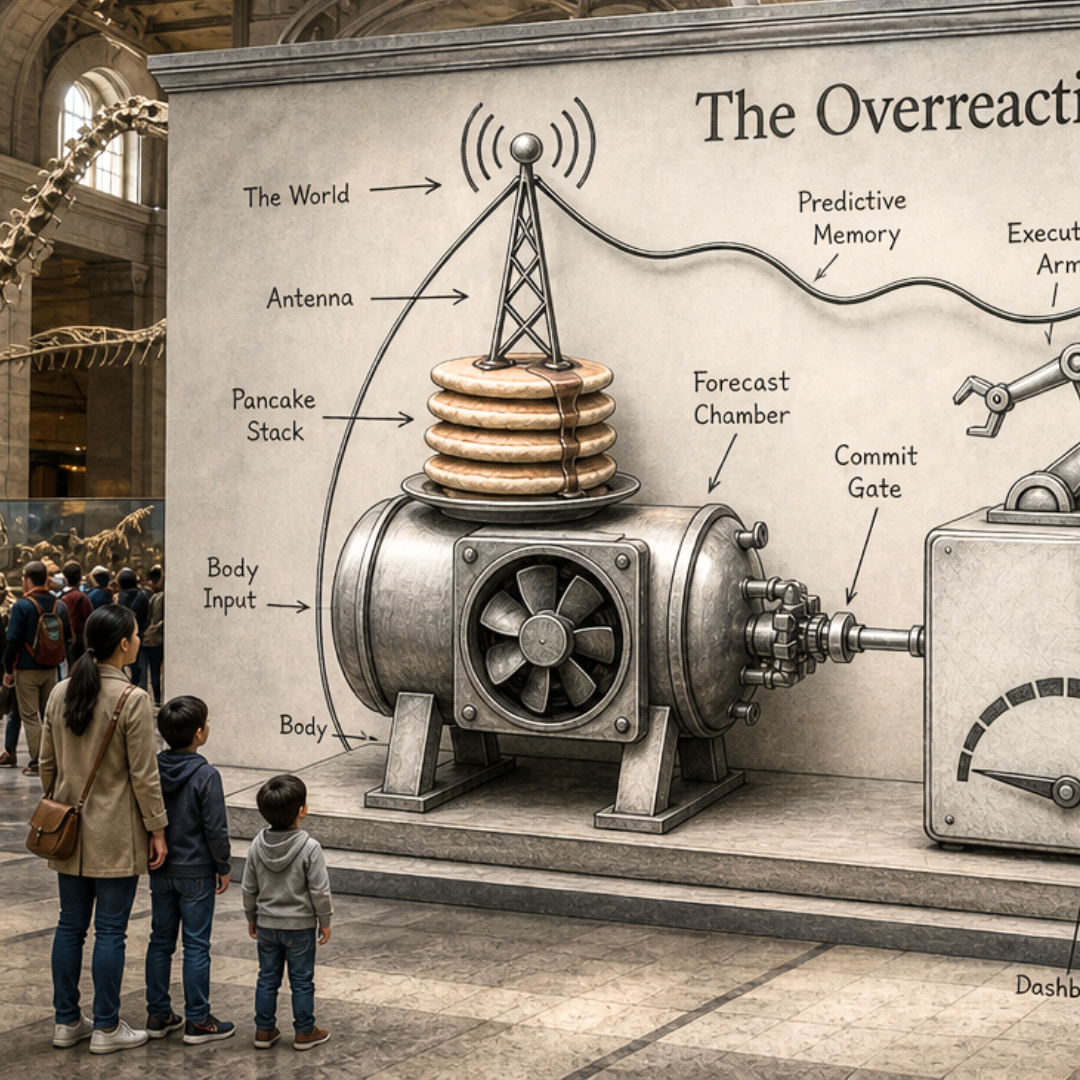
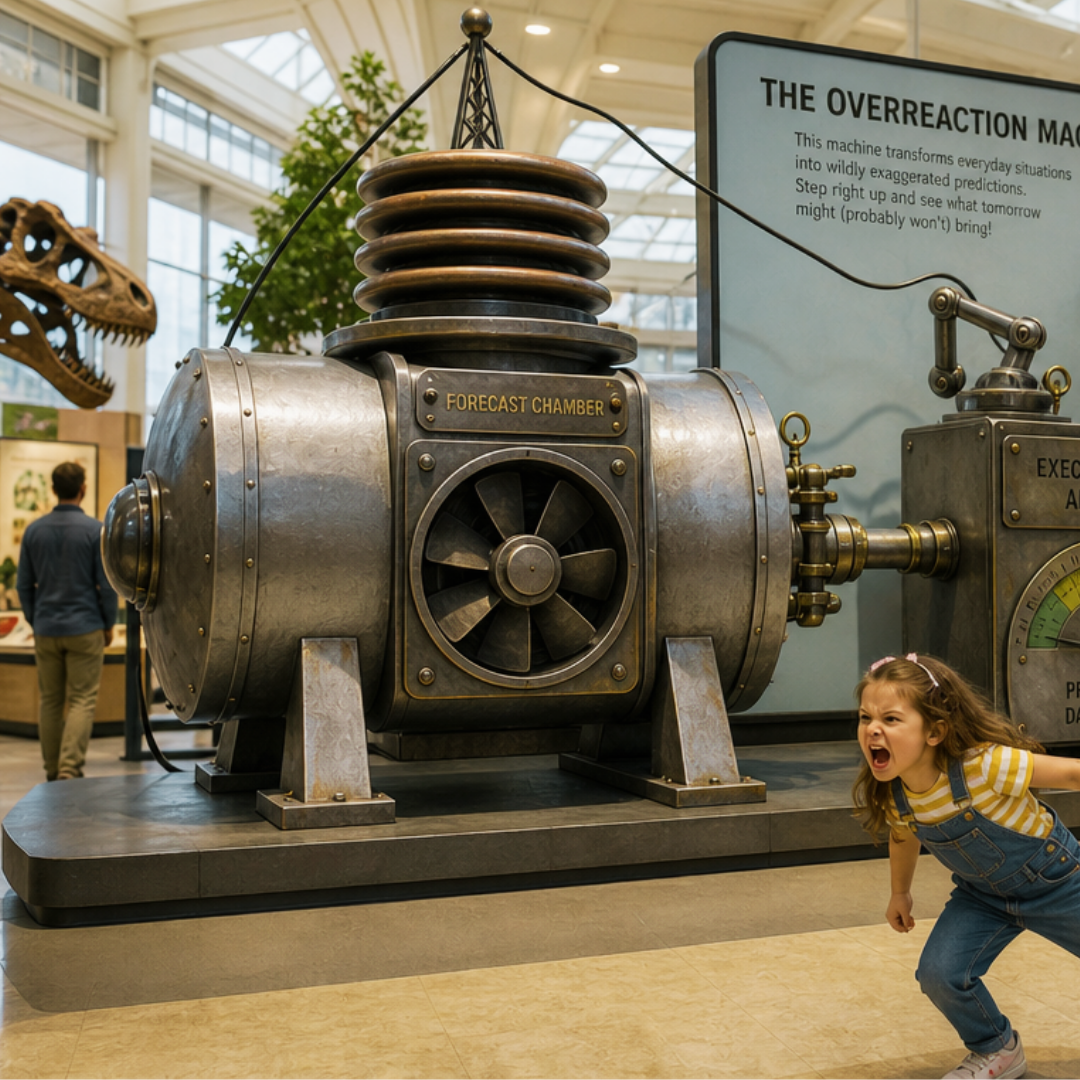
This is what makes new ideas so difficult to accept. They never arrive alone. The Forecast Chamber immediately begins constructing the futures attached to them.
If Semmelweis is right, what else becomes true? Maybe I helped kill patients. Maybe the methods I trusted were wrong and the colleagues who respect me will see me differently. Maybe the medical system that made me an expert isn't as reliable as I thought. Now the machine isn't choosing between handwashing and not handwashing, it's choosing between entire projected futures.
This is where the Overreaction Machine becomes useful. Humans don't evaluate an idea in isolation and then decide whether to accept it. The idea enters a choosing architecture already carrying identity, reputation, belonging, predictive history, and whatever consequences the machine can see coming next.
Sometimes Truth gets a relatively inexpensive path through the machinery. Sometimes accepting the truth is the most expensive future in the room.
The medical community eventually rejected Semmelweis's conclusions. His career collapsed and his mental health deteriorated under years of ridicule and isolation. In 1865 he was committed to an asylum, where he was beaten by guards. The wounds became infected, and he died from sepsis, the very kind of infection he had spent his career trying to prevent. Semmelweis's idea disappeared with him.
Pasteur got there next, then Lister, then Koch, and between the three of them the whole germ theory Semmelweis never got to prove finally had a name. Looking back, physicians realized that Semmelweis had been pointing toward the same future all along.
Eventually a pattern named the Semmelweis Reflex was coined. It describes our tendency to reject new information when it conflicts with established beliefs. Semmelweis's story suggests something even more specific. New ideas are rejected because of the meaning they acquire after they enter the mind.
Ideas never arrive by themselves. The unconscious mind immediately connects them to identity, reputation, morality, belonging, memory, and years of previous experience. Two people can hear exactly the same sentence and react as though they heard two completely different ideas. The words never changed, the meaning did.
Maybe that's why history often looks confusing. Looking backward, revolutionary ideas appear obvious. At the time they rarely feel that way. Every idea enters a world where it must first survive the meanings attached to it before anyone can discover whether it was right.
Maybe that's why history often looks confusing. Looking backward, revolutionary ideas appear obvious. At the time they rarely feel that way. Every idea enters a choosing architecture, and the machine has to deal not only with whether the idea might be true, but with every future that becomes possible if it is.
Semmelweis didn't ask doctors to buy chlorine. He asked them to enter a future in which their own hands may have killed the women they were trying to save. The chlorine was cheap. That future wasn't.
Explore MindStretched
Once you can see the machinery, human choice stops looking quite so weird.