Why is it called the overreaction machine?
A text appears. Can we talk?
Sometimes you read it, reply, and continue making dinner. But other times, before you've even put the phone back in your pocket, something else quietly begins happening. Maybe they're upset. Maybe I forgot something. Maybe somebody's sick. Maybe this is about yesterday. Maybe they need a favor.
The message hasn't changed. It still contains exactly three words. No new information has arrived, yet the conversation already feels different.
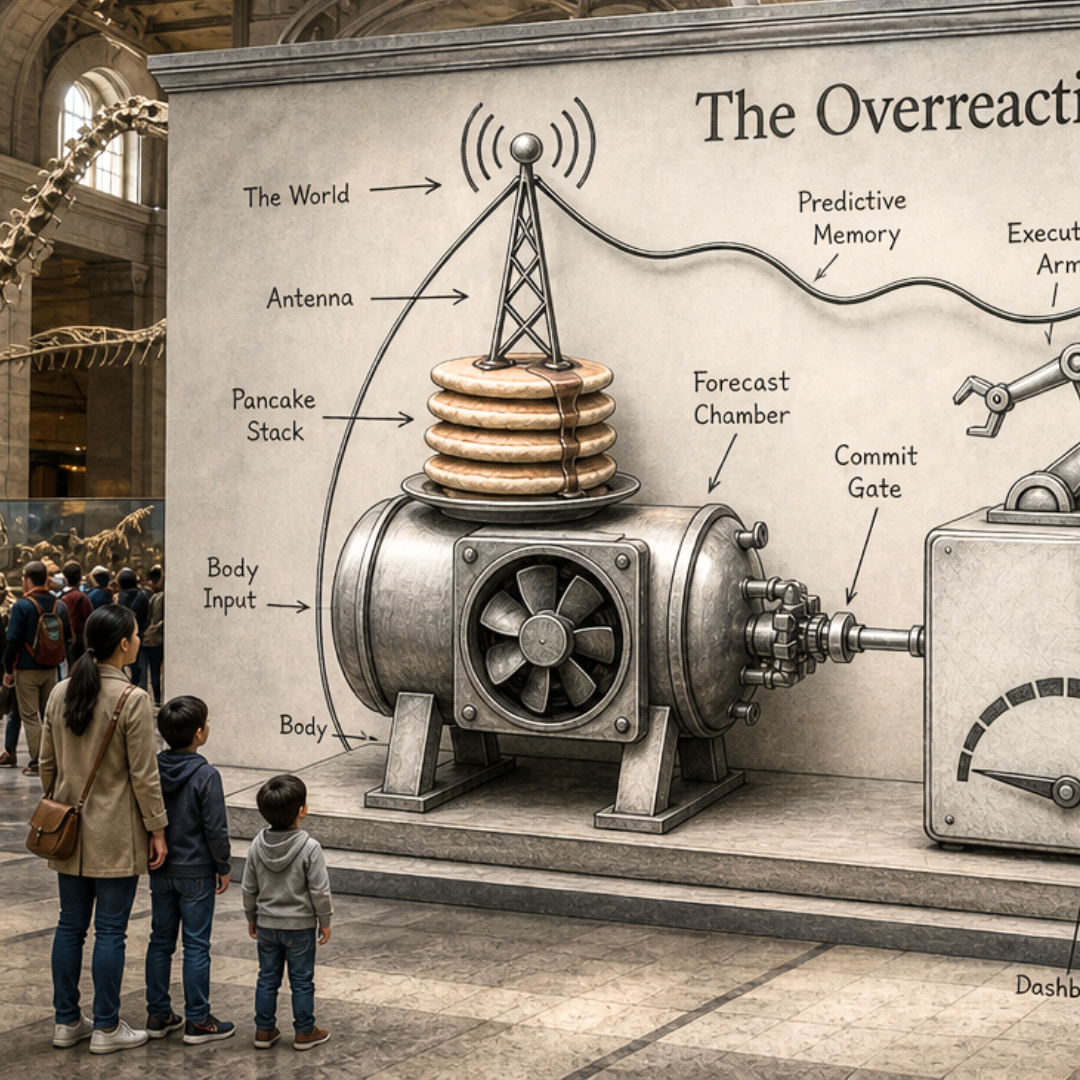
We usually explain moments like this by saying we're overthinking, worrying, or letting our emotions get ahead of us. Those descriptions aren't entirely wrong. They simply begin remarkably late. By the time you notice yourself worrying, something much more important has already happened. The machine has continued reality into several possible futures and begun responding to them as though they deserve consideration.
Each possibility is slightly different. In one future you're about to apologize for something you didn't realize you'd done. In another, someone has bad news. In another, they're asking for help. In another, they're ending a relationship. None of those futures exists anywhere outside your own mind. Reality has offered only three words. Everything else was supplied by the machine.
The strange part isn't that the machine generated possibilities. That's the actual job of the forecast chamber. The strange part is how quickly each possibility begins changing the meaning of the message itself. Three words that look perfectly ordinary now seem heavy, uncertain, or threatening. Nothing outside the phone has changed besides the futures surrounding the message.
Once you begin noticing this, it quietly appears everywhere. A supervisor says, "Can I see you for a minute?" Someone pauses a little too long before answering your question. Your spouse sighs across the dinner table. Your child is not home at the time specified. Your doctor says they'd like to repeat one of your blood tests.
Reality offers one small signal. Almost immediately, the machine continues it into possible tomorrows. Some of those tomorrows disappear almost as quickly as they appeared, others linger. Some become so vivid that they begin changing how the present moment feels long before the future has had any opportunity to arrive.
The same machinery works in happier directions as well. You hear about an opening at your dream company and immediately begin imagining yourself working there. You walk past a house with a For Sale sign and suddenly picture yourself planting a garden in the backyard. Someone mentions the powerball jackpot is 653 million, and before the conversation ends you're already wondering what it would be like to live by the ocean. The machine doesn't specialize in fear. It specializes in possibility. It is constantly extending reality just far enough into the future to ask a single question.
What happens next?
Most of those futures quietly disappear. Some survive long enough to become plans. A very small number eventually become your life. The remarkable thing is how little reality is required to start the process. It just takes one sentence, one glance, one email subject line, one smell, one social media post. The signal itself can be almost unbelievably small. The machine does the rest.
The sequence is remarkably consistent. Reality provides a signal, then the machine immediately continues it into possible futures. Those futures begin changing the present long before reality has revealed which one, if any, is true. Only afterward do we begin explaining why we feel the way we do.
The feeling arrived before the explanation. The explanation arrived before the facts. By the time reality finally answered the question, the machine has often been living inside half a dozen different futures, sometimes many more.
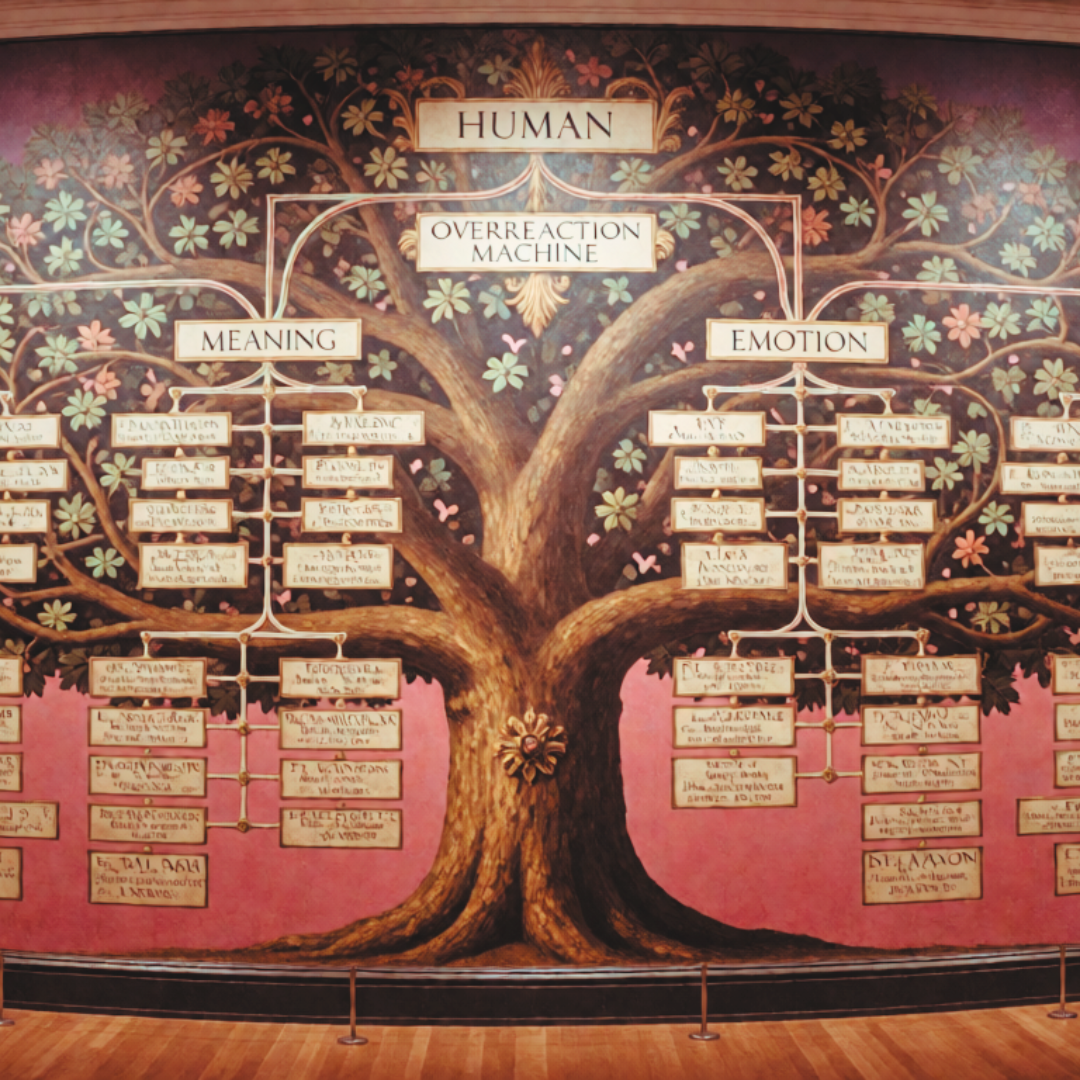
That's why it's called the Overreaction Machine.
The machine isn't reacting to the message, Can we talk? It's reacting to futures it has already begun constructing. The message arrives, reality hasn't moved, but the machine has. The Overreaction Machine doesn't overreact because it reacts too strongly. It overreacts because it reacts too soon.
Explore MindStretched
Once you can see the machinery, human choice stops looking quite so weird.