
What is the actual limit of human intelligence?
For more than a century, we've assumed that intelligence is mostly about creating better ideas. The assumption is so familiar that we rarely notice we're making it. More intelligent people see what everyone else misses. They solve harder problems, invent better technologies, and gradually move civilization forward. Intelligence generates ideas and progress happens. Except that's not really how it works.
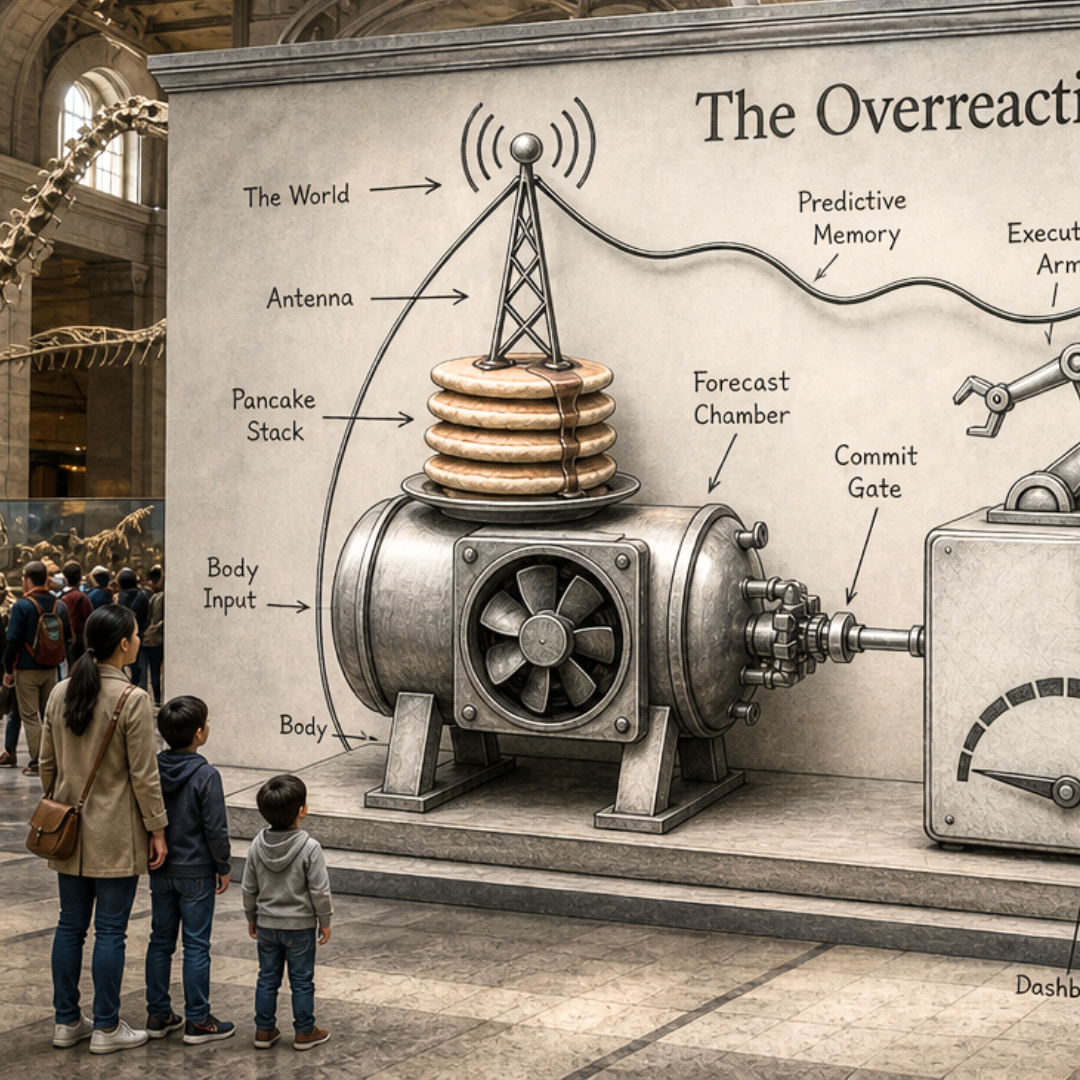
Every idea begins with the same disadvantage. It has to compete for your attention. Most never succeed. Let’s say you walk into a meeting nervous that your boss is going to ask you to explain the report you’ve been working on. You glance around the room noticing who’s there and what the agenda says. For some reason you feel unusually warm and wonder whether you should search through your purse for a tissue to wipe your upper lip. Thousands of other details disappear without you ever realizing they were available. Before an idea has a chance to exist, your reality has already been dramatically reduced.
Out of everything you notice, which honestly isn’t much, only some of it feels important. Maybe the person to your right sighs before the presentation begins. Two numbers on a spreadsheet don't seem to fit and keep bothering you while someone else is talking. Most observations disappear here, not because they're wrong, but because your mind has decided something else deserves its resources.
Now the possibilities begin. You wonder whether the feature being presented is actually helping customers. Maybe removing it would make the product simpler and even more importantly save the company some money. You think, Hmm, this doesn’t seem to make much sense.
Most of those possibilities don't survive very long. You've only worked here six months and everyone else seems comfortable with the current design. They’ve been working on this product for years. What do you know? They must have considered this already. You don't want your first contribution in a meeting to be an idea everyone else rejected long before you arrived. Without anyone saying a word, the possibility quietly disappears.
Nothing dramatic happened. Nobody argued against your idea or proved it wrong because you never even said it. It was eliminated internally because it was too uncomfortable holding on to it.
An idea that actually survives inside one mind still has a long journey ahead of it. First it has to survive you speaking up, actually saying it out loud without deciding halfway through the sentence that it isn't worth finishing. Then it has to survive the people listening. What if you actually did mention removing the feature and the guy to your right snickers under his breath. Maybe your boss dismisses it in ten seconds. Even if everyone agrees it's interesting, it could be "not for right now." The idea survives that meeting only if somebody continues carrying it afterward.
If that happens, the idea faces another kind of cost. Organizations don't eliminate possibilities because people laugh at them. They eliminate possibilities because changing direction is expensive. New budgets have to get approved, old projects have to die, and somebody's career is usually attached to the decision you're trying to undo. At this level, the question isn't whether the idea is correct. The question is whether the organization can afford to reorganize itself around a different future.
The same thing happens to your idea throughout society, just at a bigger size. Universities preserve what we already know, government and industry maintain the status quo, and by the time an idea reaches civilization it's already survived an absurd number of chances to just quietly disappear. We remember Galileo Galilei because science came to agree the earth moved around the sun instead of the other way around. We remember Charles Darwin because natural selection explained more about breeding pigeons than any other explanation.
History quietly creates the illusion that successful ideas were always destined to succeed. But, you never said your idea about the feature out loud, and neither do most people, most of the time. Before an idea can change anything, it has to survive the person who had it first.
Explore MindStretched
Once you can see the machinery, human choice stops looking quite so weird.