
Everyone has the same 24 hours
This is one of those sentences that survives because it contains an impressive amount of mathematical accuracy. There are, in fact, 24 hours in everyone’s day. Beyoncé gets 24, and you get 24, and the person who posted the inspirational quote reminding you that Beyoncé gets 24 presumably also gets 24.
What the sentence means, however, is not really about clocks. It means, Look what other people managed to accomplish with their day. What exactly happened to yours?
You could object immediately. People have different jobs, children, money, health, responsibilities, assistance, commutes, sleep, and available resources. Beyoncé probably doesn't spend Thursday afternoon comparing prices on printer cartridges like you just did. All these objections are true.
But we don't need any of those differences to break the premise. We can make the experiment much cleaner. Give two people the same four free hours, the same circumstances, and same assignment - write a report.
At 8:00 a.m., both sit down at their computers. The first person starts writing. There are decisions, of course, because writing is full of them. Where should the report begin? Is this example useful? Does that paragraph belong here? Should this section be longer? Is that claim clear enough? Should I look something up or keep going? Is this good enough to leave alone?
Their machine keeps answering - start here, keep that example, move that paragraph, look this up, that's good enough, next.
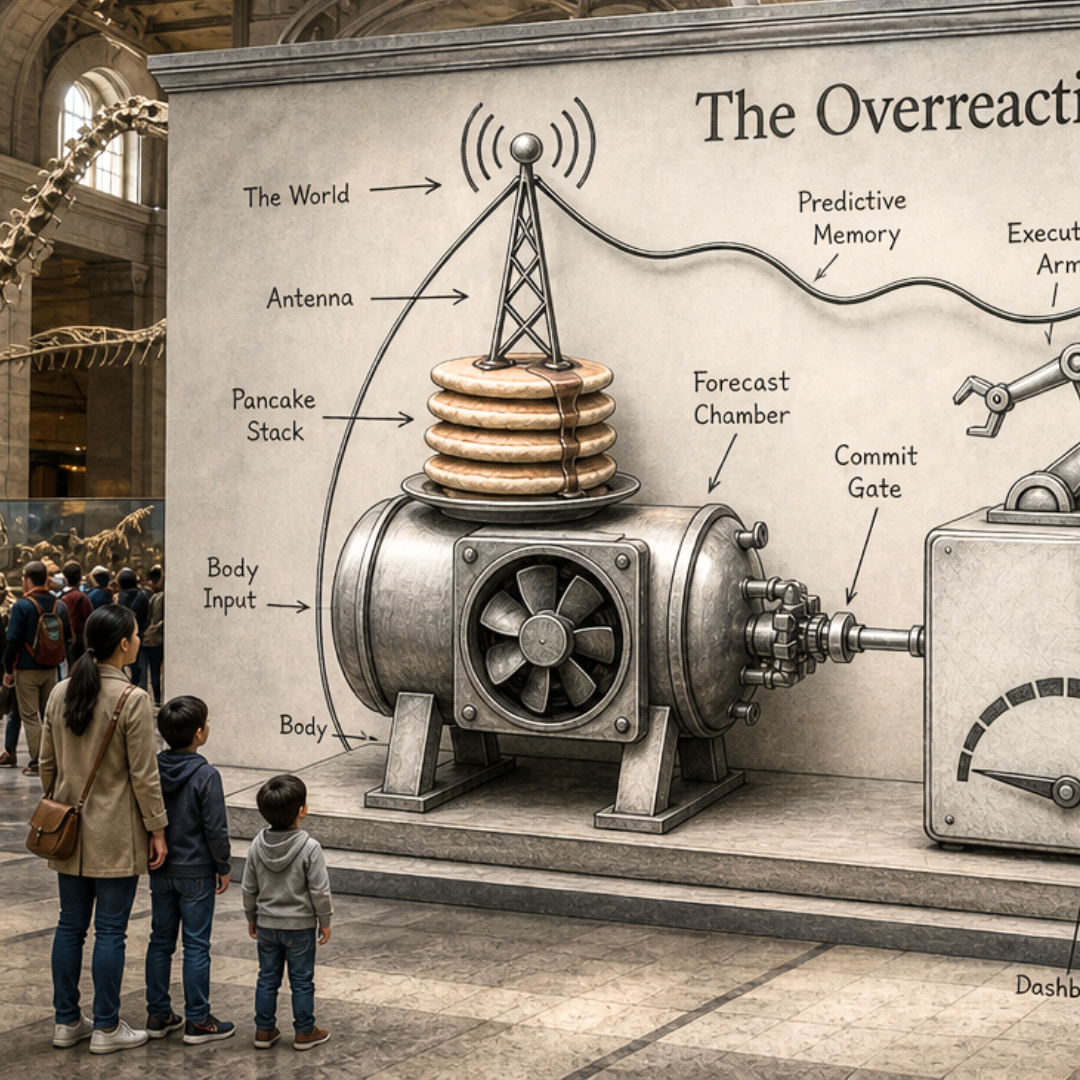
Each decision generates possible futures, the possibilities are compared, one becomes affordable enough, and the Commit Gate closes.
Clunk.
Then another.
Clunk.
Then another.
By noon, there is a report.
Now put a different machine in front of the same assignment. It also starts at 8:00 a.m and fully intends to write the report. It's not watching television, reorganizing the spice cabinet, or scrolling through Instagram while claiming to work. It's actually working.
Should the report start with the example or the explanation? The example is more interesting, but perhaps the reader needs context first. I could write both openings and compare them. Actually, before I decide, I should look at the reports from last year. Those used a completely different structure. Maybe this report should use that structure. But then this section wouldn't fit. Perhaps I should outline the whole thing first. Although I already have an outline. Is it the right outline?
Eventually the machine commits and an opening is chosen. Now we need a headline, and here we go again.
From the outside, we are tempted to call this indecision. But indecision mostly describes what the machinery looks like to somebody waiting for an answer. It doesn't tell us what is happening inside. From inside, this is how some machines make decisions.
Nor is this procrastination because the person isn't avoiding the report. The machine is actively attempting to produce it the entire time. The problem is that execution is downstream of choosing.
You can't write a report without making decisions. In fact, you can't produce much of anything without making an astonishing number of them. Every paragraph contains forks. Every edit contains forks. Keep this, delete that, explain more, move on, check it, don't check it, good enough, not good enough.
One machine generates relatively few futures around each fork, compares them, and commits quickly. Another generates more possibilities, follows them farther, keeps them alive longer, or requires a larger difference in projected cost before committing.
Possibility generation is behind the scenes mechanics. We do not consciously choose how many thoughts we're going to have before we make a decision. The same report requires a different amount of clock time to get through each gate.
And this is where the arithmetic starts becoming interesting. If one machine spends thirty seconds choosing where a section should go and another spends six minutes, nobody needs to alert the authorities. It's five and a half minutes.
But a report doesn't contain one decision, it contains dozens, maybe hundreds. The more decisions the work contains, the larger the difference becomes.
Five minutes here, eight minutes there, twelve minutes comparing two approaches, neither of which will exist by tomorrow. Fifteen minutes deciding whether something needs further research. Seven minutes wondering whether a paragraph should be moved before eventually leaving it exactly where it started.
Some machines spend enormous amounts of their clock time processing futures that never happen. They look at the opening that isn't used, check the structure that isn't chosen, the paragraph that isn't moved, the research path that isn't followed, the version that isn't submitted. Those futures never become part of the report, but the time spent processing them was real.
At noon, both people have spent four hours working. One has a finished report while the other has three pages.
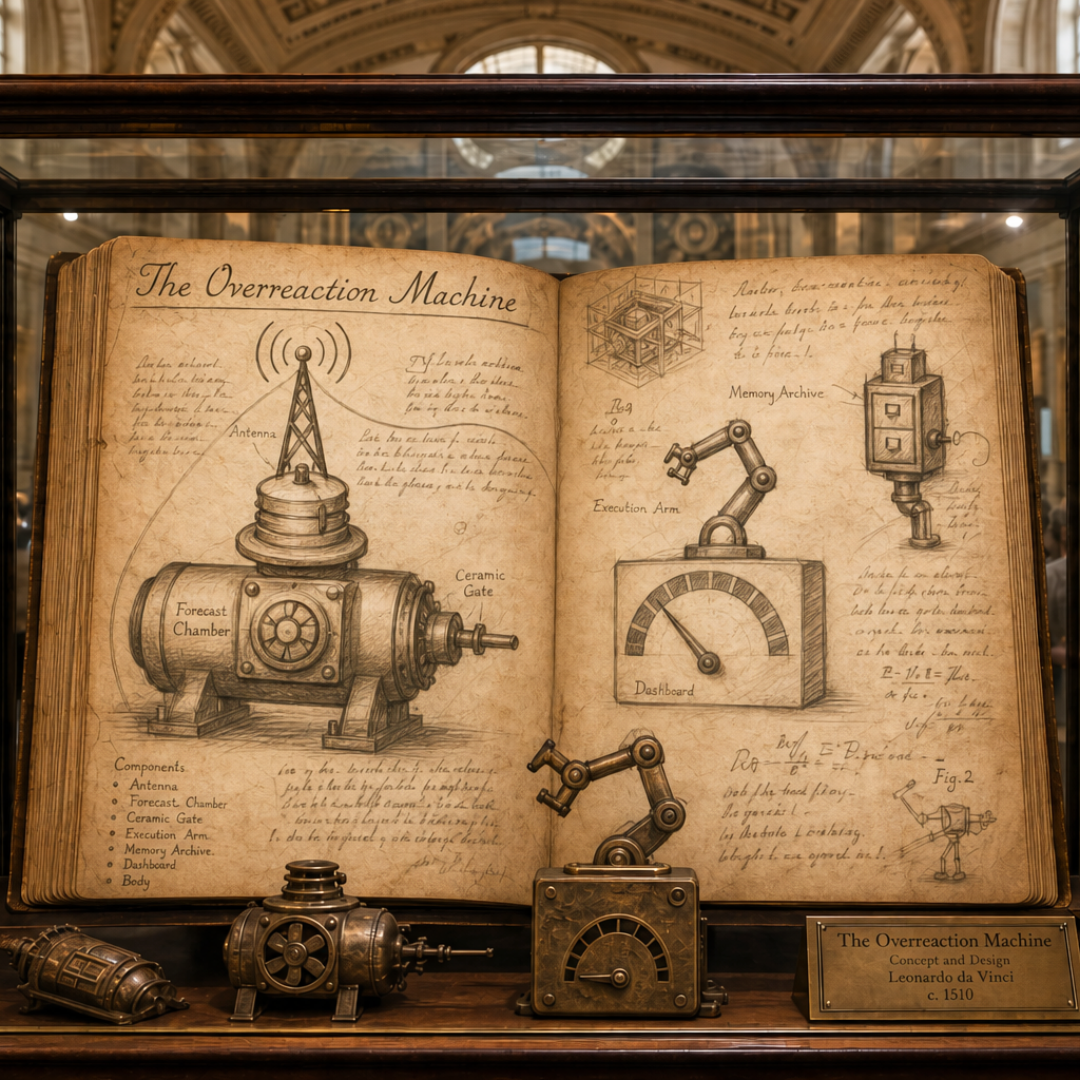
Now someone walks into the Museum of Human Machinery carrying a motivational poster.
EVERYONE HAS THE SAME 24 HOURS.
Yes, we have checked the clocks. What the clock can't tell us is what happened during those hours.
Productivity culture tends to count what appears downstream: reports finished, workouts completed, emails sent, businesses built, projects launched. It can see execution because execution leaves artifacts in the world while choosing often doesn't.
Nobody can see the seventeen versions of a future that a Forecast Chamber generated before one sentence was written. Nobody can see the comparisons that occurred before the Commit Gate closed. Nobody counts the twenty minutes spent reaching a decision that another machine reached in twenty seconds. They just count the pages.
Then they compare the pages and conclude that one person made better use of the same four hours. Maybe, but the clock hasn't demonstrated that. All it has demonstrated is that four hours passed.
This doesn't mean slower commitment is bad machinery and faster commitment is good machinery. A machine that generates more futures may catch something another machine misses. A machine that commits quickly can efficiently produce an impressively stupid report. Speed is not the same thing as quality.
The point is much simpler. People do not pay the same amount of clock time to make a choice. And because execution is downstream of choosing, people don't arrive at their visible work with identical amounts of their day still available for execution.
Which makes “everyone has the same 24 hours” technically correct in approximately the least useful way possible.
Everyone gets the same number of hours because clocks are standardized, choosing architectures aren't. So yes, you have the same 24 hours as Beyoncé. What we don't know is how much clock time each machine has to pay for each choice.
Some Commit Gates go clunk. Others are like, Hold on a second, I have 34 other choices to look over first.
Explore MindStretched
Once you can see the machinery, human choice stops looking quite so weird.