You don't see the world. You see your theory of it.
Imagine that every experience you have leaves behind a machine part. Not an entire machine. Just a part.
At first they don't seem particularly important. Watching your grandfather feed stray kittens on his back porch becomes one piece. Watching your mother collect 30, then 60, then 90 rolls of toilet paper becomes another. Your college roommate and the way she rocked in her bed stays with you for reasons you can't explain. Your old friend tells you, “The future is fixed,” and you spend the next 3 months watching physics YouTube videos trying to decide if it’s true. You meet a new friend online, then your country goes to war with their country. Every day life quietly hands you another strangely shaped part.
You don't think you're building anything. Why would you? These moments are scattered across years, sometimes decades. They involve different people and various cities and online spaces you’ve lived in. They don't arrive with little labels telling you which future idea they'll eventually belong to. They're simply observations, and like most people, you carry them with you without giving them much thought.
Every once in a while, though, you find yourself picking up two of those pieces and holding them together. You aren't trying to explain the world. Your brain is just automatically curious in the way brains are when they spot a pattern. "That's interesting," you think. "Those two seem connected somehow." Sometimes they fit surprisingly well. Other times they almost fit, but not quite. You set them back down, go back to living your life, and months or years pass before another piece catches your attention.
Little sections begin appearing on the workbench without you really deciding to build them. Two pieces become three, then three become five. Every so often a new experience sends you back to something you noticed years ago, and suddenly it seems to belong somewhere completely different than you originally thought. You move a few things around. One connection disappears and another becomes obvious. Nothing dramatic happens. The pile simply becomes a little more organized than it was before.
After enough years have passed, the workbench begins looking different. You still don't have a complete machine, but you can no longer pretend you're looking at random parts either. There are wheels, a chain, something that looks suspiciously like handlebars. The pieces seem to be pointing toward something, although you couldn't yet tell someone exactly what it is.
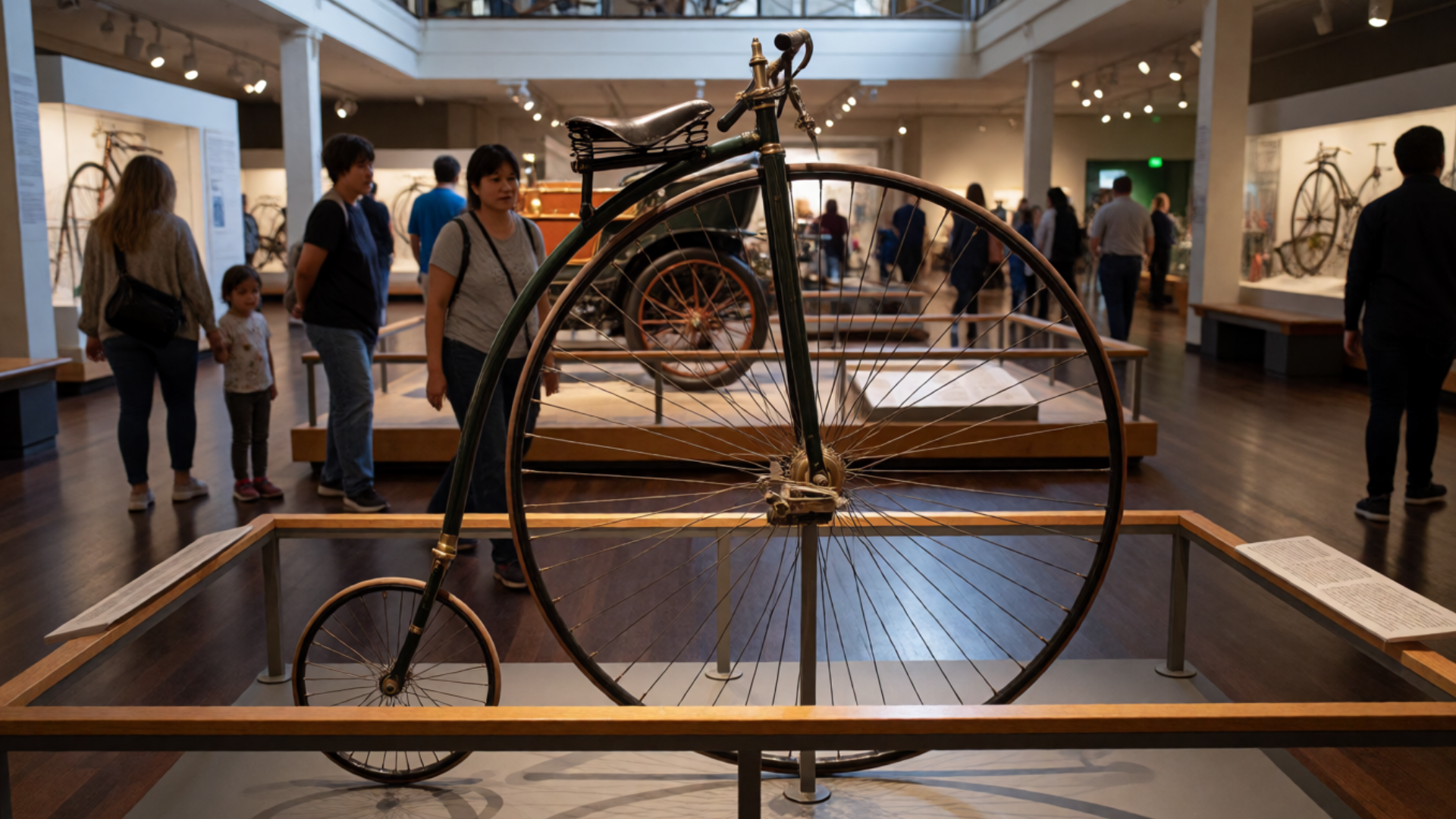
Then another observation arrives. It isn't obviously more important than the thousands that came before it. In fact, if you had encountered it twenty years earlier, you might not have noticed it at all. But this time it's different because of everything that's already sitting on the bench. You pick it up, hold it against a few older pieces, tighten one connection, then another, and all at once you realize you've stopped wondering what you're building. It's a bicycle.
You don't know exactly when that happened because there wasn't one magical piece that changed everything. There wasn't one afternoon where you consciously decided, “Aha! Now that I know I’m a Libra, I think I’ll build a life around astrology from this point forward.” Looking back, it seems as though hundreds of small observations had been quietly finding one another for years. The realization feels sudden even though the construction wasn't.
Something else changes the moment you recognize the bicycle. The next time life hands you another part, you don't begin by asking what kind of machine you're building. You already know. The question quietly becomes, "Where does this fit on my bike?"
If someone hands you a propeller, you don't immediately wonder whether you've been building an airplane all along. You turn the propeller over in your hands and study the bicycle. Maybe it replaces something. Maybe you've misunderstood one section and bicycles are more complicated than you thought. Whatever happens next, your first instinct is to make the new piece fit the machine that already explains everything else.
After a while you begin noticing that other people have built different machines. One person eventually realizes they've been building a machine that explains human behavior through trauma. Another swears it's all evolutionary biology. Somebody else is convinced it's religion, or politics, or whatever their therapist said in year two. Each of them looks at thousands of observations gathered over an entire lifetime and quietly reaches the same conclusion, "This is what all those pieces were trying to become."
At first it's tempting to assume somebody assembled their machine incorrectly. Then you remember something obvious that somehow never seemed important before. Everyone gathered a different pile of parts. They didn’t notice exactly what you noticed. Nobody had your family or birth order within that family. They didn’t have your teachers or read the same books you did. And, even if for some miraculous reason they did, even if someone had the exact life you did, your questions, your successes, your disappointments, or your strange quirky observations that refused to go away could only be produced by you. Of course they didn't build exactly the same thing.
Now imagine someone walks over, studies your bicycle for a while, and says, "I don't think that's a bicycle."
Your first reaction probably isn't curiosity. It's certainty. "What are you talking about? Of course it's a bicycle."
Why wouldn't it be? The wheels fit. The chain and handlebars belong where you put them. Hundreds of parts already work together. This machine has been carrying you through the world for years. It explains yesterday and helps you understand today. Every new part you've found has eventually found a place somewhere on the frame.
Starting over doesn't feel like learning something new, it feels like blowing apart the machine that has quietly organized your entire understanding of the world. An airplane might turn out to explain the parts better, but before you could ever discover that, you would first have to reduce your beautifully functioning bicycle back into a confusing pile of disconnected pieces.
Explore MindStretched
Once you can see the machinery, human choice stops looking quite so weird.